.png)
Content Marketing Strategy Guide for Ecommerce Success


Most ecommerce businesses miss out on growth because they lack clear content marketing goals. Setting precise objectives is more than just a planning step. It links daily efforts to real sales and customer loyalty. In fact, research shows that brands with defined content strategies achieve significantly higher customer engagement. If you want your content to attract the right shoppers, drive action, and build lasting trust, a strategic approach is the only path forward.
Table of Contents
Quick Summary
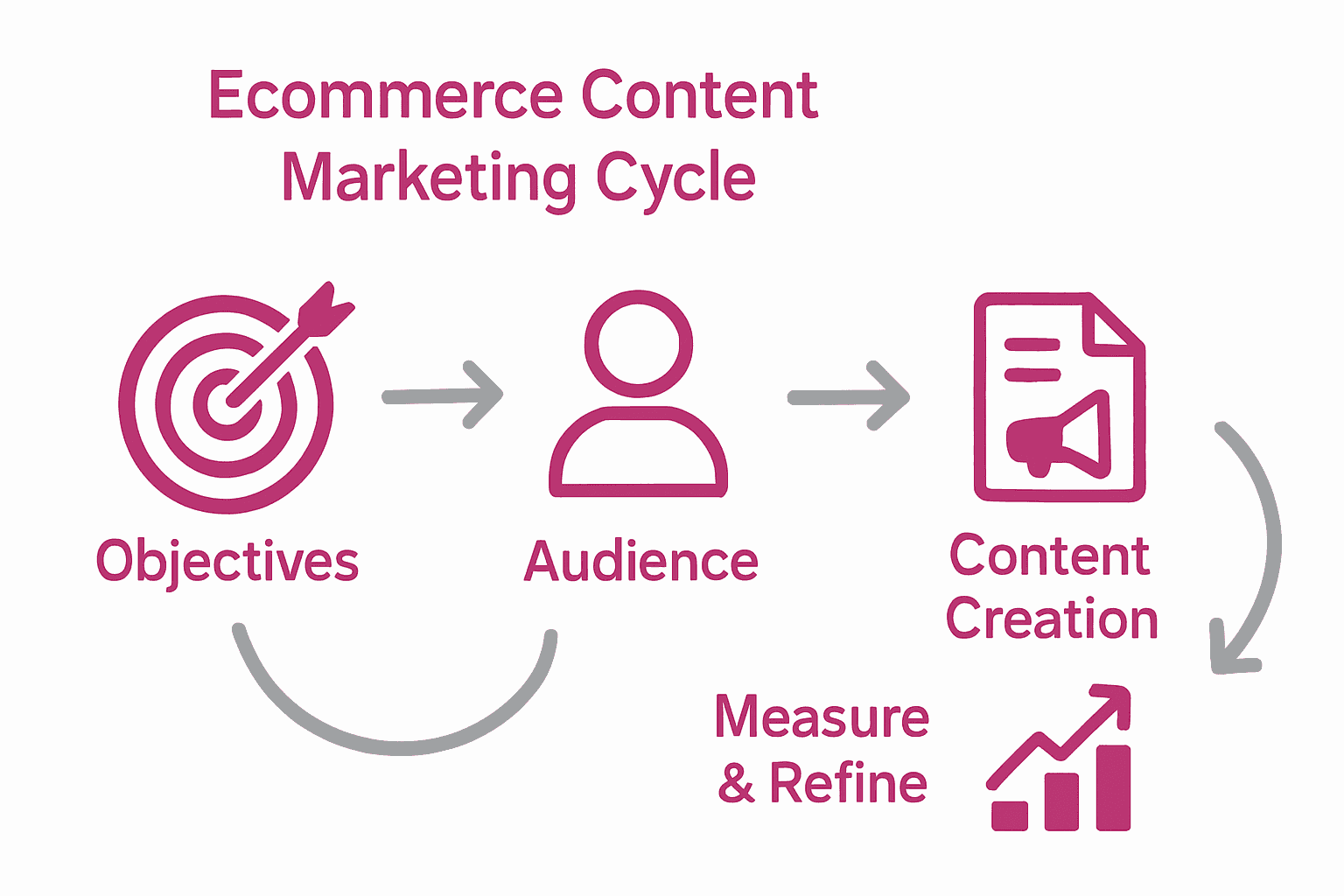
Key Point | Explanation |
1. Define clear objectives | Set specific content marketing goals to guide your strategy and measure success effectively. |
2. Understand your audience | Gather detailed demographic and psychographic data to tailor content that resonates with your target consumers. |
3. Develop engaging content themes | Align content themes with audience interests and business goals to ensure relevance and value. |
4. Create high-impact content | Deliver diverse, quality content that addresses audience needs to enhance engagement and conversions. |
5. Measure and refine strategies | Continuously track performance metrics and adjust strategies based on insights to improve results. |
Step 1: Define ecommerce content marketing objectives
Defining precise content marketing objectives transforms your ecommerce strategy from random content creation to a targeted growth mechanism. According to research from ijrar.org, establishing clear goals is crucial for measuring marketing effectiveness and driving meaningful business outcomes.
To develop robust objectives, start by identifying specific outcomes that align with your business needs. According to ijebe.feb.unila.ac.id, these typically include attracting prospective consumers, developing engagement, and building customer trust. Your objectives might encompass:
Increasing website traffic by a specific percentage
Improving conversion rates
Enhancing brand recognition
Generating more qualified leads
Building stronger customer relationships
The key is setting measurable goals that provide clear direction. Avoid vague aspirations like “get more traffic” and instead focus on precise targets such as “increase organic website visitors by 25% within six months”. This approach allows you to track progress, adjust strategies, and demonstrate tangible marketing impact.
Remember that your content marketing objectives should directly connect with broader business goals. By creating a strategic alignment between content efforts and organisational targets, you transform content from a cost centre into a powerful revenue generation tool.
Step 2: Identify and analyse your target audience
Understanding who your audience is represents the foundation of successful ecommerce content marketing. According to research from ijrar.org, effectively analysing consumer preferences and behaviours is critical for creating targeted marketing strategies.
To comprehensively identify your target audience, start by gathering detailed demographic and psychographic information. ijebe.feb.unila.ac.id suggests focusing on understanding audience needs and interests to create resonant content. Begin with these key research methods:
Review existing customer data
Conduct surveys and interviews
Analyse website and social media analytics
Create detailed customer personas
Track purchasing behaviours and patterns
Dig deeper than surface level demographics. Explore motivations, pain points, aspirations, and online behaviours that influence purchasing decisions. This nuanced understanding allows you to craft content that speaks directly to your audience’s specific challenges and desires.
Pro tip: Use tools like Google Analytics, social media insights, and customer relationship management platforms to gather comprehensive audience intelligence. The more precise your audience understanding, the more effectively you can tailor your content marketing approach to drive engagement and conversions.

Step 3: Develop relevant and engaging content themes
Content themes are the strategic backbone of your ecommerce marketing approach. According to research from abacademies.org, developing relevant themes requires aligning your content with audience interests and mapping it carefully to the digital customer journey.
To create compelling content themes, start by connecting your audience insights with your business objectives. ijrar.org emphasises generating valuable and consistent content that addresses specific consumer needs. Consider developing themes around:
Product education and use cases
Industry trends and insights
Customer success stories
Problem solving content
Expert advice and recommendations
Each theme should provide genuine value beyond simple product promotion. Think about the questions your audience asks, the challenges they face, and how your expertise can help them make informed decisions. Your content themes should position your brand as a trusted resource that understands and supports customer goals.
Pro tip: Regularly review and refresh your content themes. Consumer interests evolve quickly, so stay adaptable and responsive to emerging trends and audience feedback. This approach ensures your content remains relevant, engaging, and strategically aligned with your marketing objectives.
Step 4: Create and distribute high-impact content
Creating and distributing compelling content is the heart of your ecommerce marketing strategy. According to research from taylorfrancis.com, effective content marketing requires strategic planning across creation and distribution channels to maximise audience engagement.
To develop high-impact content, focus on delivering genuine value through diverse formats. ijrar.org recommends leveraging multiple content types to attract and retain your target audience. Consider creating content such as:
Detailed product guides
Customer testimonial videos
Instructional blog posts
Expert interview podcasts
Infographics explaining complex concepts
Interactive buying guides
Each piece of content should solve a specific problem or answer a key question for your audience. Prioritise quality over quantity and ensure your content maintains a consistent brand voice and provides actionable insights. Think about the unique perspective your brand can offer that differentiates you from competitors.
Pro tip: Develop a robust content distribution strategy that extends beyond your website. Utilise social media platforms, email newsletters, industry forums, and strategic partnerships to amplify your content reach. Remember that great content means little if it does not effectively reach and engage your target audience.
Step 5: Measure performance and refine your strategy
Measuring content marketing performance is not just about collecting data it is about transforming insights into strategic improvements. According to research from ijrar.org, effectively analysing performance metrics is crucial for generating meaningful leads and optimising conversion strategies.
To create a comprehensive performance measurement approach, focus on tracking key indicators that directly reflect your original content marketing objectives. abacademies.org recommends monitoring metrics such as:
Website traffic volume
Engagement rates
Conversion percentages
Time spent on content
Social media interactions
Lead generation numbers
Return on content investment
Dont view measurement as a one time activity but as an ongoing process of continuous improvement. Each piece of content provides valuable data that can help you understand what resonates with your audience. Pay attention to both quantitative metrics and qualitative feedback. Analyse which content themes generate the most engagement and which distribution channels deliver the best results.
Pro tip: Implement a quarterly review process where you systematically assess your content performance. Be prepared to pivot your strategy quickly based on data insights. Remember that successful content marketing is an adaptive journey of constant learning and refinement.
Elevate Your Ecommerce Content Marketing Strategy Today
Crafting a powerful content marketing strategy requires clarity, audience insight, and engaging relevance as emphasised in the “Content Marketing Strategy Guide for Ecommerce Success”. If you are struggling with setting measurable objectives, understanding your audience fully or creating impactful content that truly connects, you are not alone. These challenges can stall growth and dilute your brand’s potential.
Transform these obstacles into your greatest strengths by partnering with experts who have over 25 years of experience scaling ecommerce brands. We specialise in SEO, AI-driven strategies, social media and PPC that directly target your ecommerce goals. Unlock precise audience analysis, data-driven content themes and performance measurement that convert curiosity into loyal customers.
Harness the insights shared in the guide and accelerate your results now with proven digital marketing solutions from our homepage.

Take control of your content marketing journey and see measurable improvements fast. Visit iwanttobeseen.online and explore how our tailored services turn your content into a revenue-driving machine. Do not wait for your competitors to outpace you. Act now to create content that cuts through the noise and compels your audience to choose you.
Frequently Asked Questions
How do I define ecommerce content marketing objectives?
Defining ecommerce content marketing objectives involves identifying specific outcomes that align with your business goals. Start by setting measurable targets, such as increasing website traffic by 25% within six months, which helps to track progress and inform your strategy.
What methods can I use to identify my target audience for ecommerce content marketing?
To identify your target audience, gather demographic and psychographic data through customer surveys, interviews, and analytics. Create detailed customer personas based on their needs and interests, helping you craft content that resonates with them.
What are some effective content themes for ecommerce marketing?
Effective content themes should align with your audience’s interests and address their specific needs. Consider themes such as product education, industry insights, and customer success stories that provide genuine value rather than just promoting products.
How can I create high-impact content for my ecommerce strategy?
Creating high-impact content involves developing diverse formats like blog posts, videos, and infographics that answer key audience questions. Focus on delivering quality content that solves problems for your customers, ensuring it differentiates your brand in a competitive landscape.
What key performance metrics should I track for my ecommerce content marketing?
Key performance metrics to track include website traffic, engagement rates, and conversion percentages. Analyze these metrics regularly to assess the effectiveness of your content and refine your strategies for better outcomes over time.
How often should I review and adjust my ecommerce content marketing strategy?
You should review your ecommerce content marketing strategy quarterly to stay adaptable and responsive. This regular assessment will help you identify trends and insights that can lead to improvements in your content effectiveness and engagement.
Recommended
Comments