.png)
8 Leading Ecommerce PPC Tools for Ecommerce Business Owners in 2025

Choosing the right marketing solution for your ecommerce business can feel overwhelming with so many options on offer. Some tools promise hands-on guidance while others focus on automation or deep data insights. The way you reach customers and manage your campaigns could be transformed depending on what you pick. Each approach comes with its own way of working, strengths to consider and limits to keep in mind. What stands out most is how these options shape the way you grow and connect online. Curious about which direction will help your store make the biggest impact? Keep reading to see how the leading choices compare.
Table of Contents
I Want To Be Seen

At a Glance
I Want To Be Seen is a focused ecommerce marketing partner that combines hands-on ecommerce leadership with a compact, results-driven delivery model. It bundles SEO, social media, paid ads, branding and website optimisation into one strategic service, which makes it a strong choice for stores that want a single point of accountability. Expect mentorship, clear strategy and measured scaling rather than a laundry list of one-off tasks. Bottom line: built for growth-minded ecommerce owners who value experience and clarity.
Core Features
I Want To Be Seen delivers a tightly integrated set of services: SEO optimisation, social media marketing, branding services, paid advertising campaigns and website optimisation with development support. The team pairs strategic audits and technical fixes with campaign execution and brand refinement, so your store’s visibility and conversion pathways are improved in parallel. Led by a CEO with proven ecommerce success, the service emphasises efficient delivery without the overhead or bureaucracy of a large agency.
Pros
Complete ecommerce marketing solution: The offering covers all the major channels and touchpoints an online store needs, reducing fragmentation between vendors.
Experienced leadership: The team is led by practitioners who have scaled successful ecommerce brands, bringing practical knowledge rather than theoretical advice.
Growth and results focus: Strategies are designed to scale online businesses and prioritise measurable outcomes like traffic, conversions and ROI.
Mentorship and strategic guidance: Beyond execution, clients gain access to mentorship that helps them make better long-term decisions.
Positive client recognition: Testimonials and industry accolades underline a track record of delivering tangible improvements for clients.
Who It’s For
This service is ideal for ecommerce businesses seeking a comprehensive, strategic digital marketing partner with experienced leadership. If you run an online store and want an integrated plan—SEO, PPC, social and site optimisation—managed by people who’ve done it themselves, this is designed for you. It’s especially well suited to brands that want to scale without adding internal hires or juggling multiple specialised agencies.
Unique Value Proposition
We offer digital marketing services specialising in SEO, AI , Social Media and PPC for eCommerce websites. We have over 25 years experience scaling multiple highly successful e-Commerce brands of our own and our clients. That combination—deep, practical ecommerce experience plus a full-stack marketing capability—is the product’s distinguishing strength. Rather than competing on price or volume, I Want To Be Seen competes on clarity and impact: bespoke strategies, hands-on leadership and mentorship mean fewer missteps and faster learning curves. The compact team model is a deliberate design choice: it minimises overhead, speeds decision-making and maintains accountability for results. In practice, that translates into cohesive campaigns, clearer prioritisation and faster path-to-value compared with larger, more fragmented providers.
Real World Use Case
A mid-size retailer hires I Want To Be Seen to lift organic visibility while reducing reliance on expensive paid traffic. The team audits technical SEO, refreshes category pages, refines paid campaigns and aligns social content to product launches—resulting in a coordinated uplift in sessions and conversion rate while lowering average cost per acquisition.
Pricing
Not specified on the website.
Website: https://iwanttobeseen.online
Google Ads
At a Glance
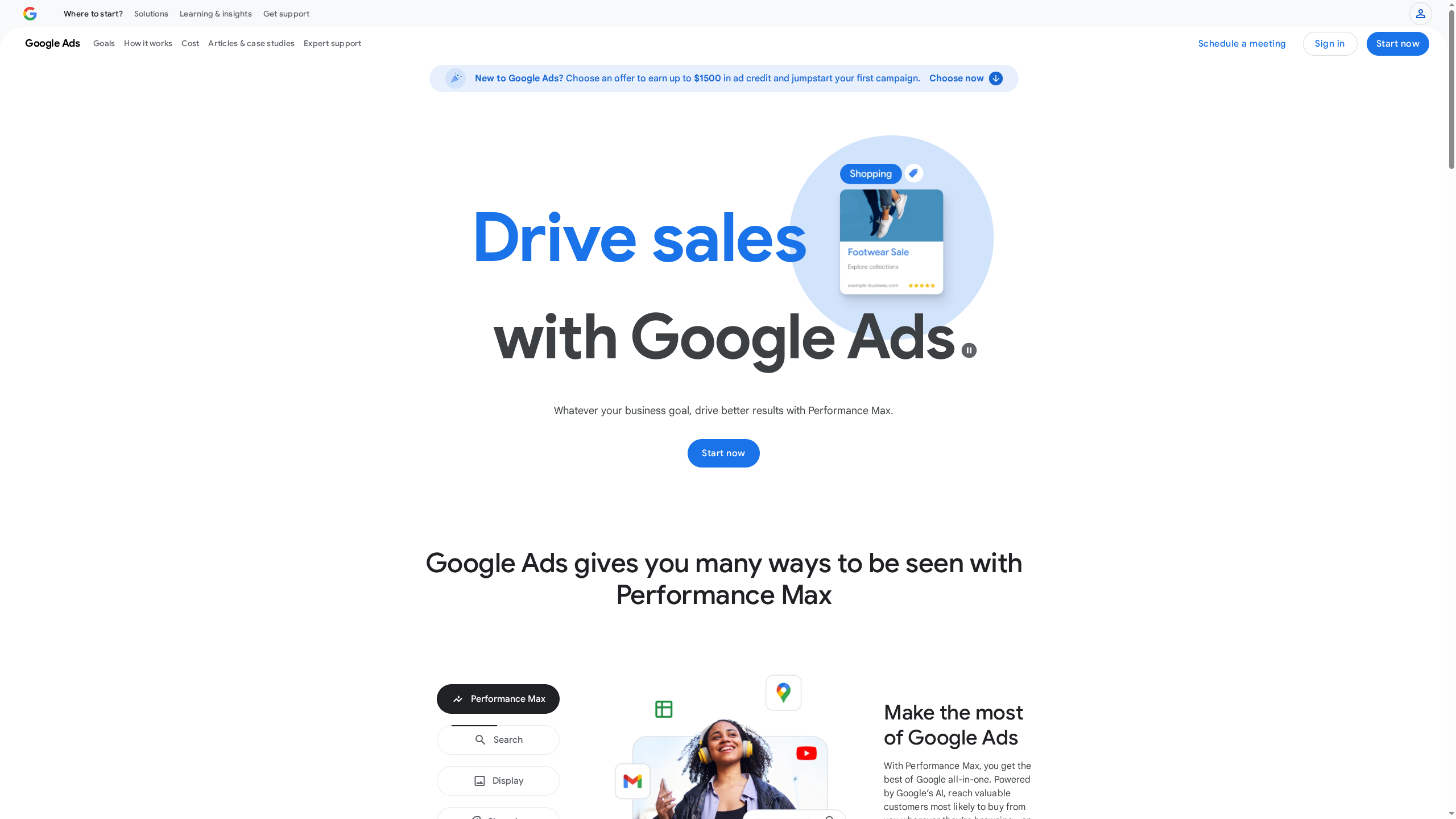
Google Ads is Google’s online advertising platform that helps ecommerce businesses reach customers across search, display, YouTube, shopping and app channels. Its strength lies in breadth: multiple campaign types and deep integrations across Google’s ecosystem let you target intent and measure results precisely. Expect powerful AI-driven optimisation tools, but also a learning curve and variable costs that need active management to control spend.
Core Features
Google Ads supports search, display, shopping, video, app and Performance Max campaigns, alongside AI-powered optimisation and creative automation. It includes practical tools such as Keyword Planner, Google Ads Editor and reach planner, plus budget management and real-time analytics. Native integrations with Google Analytics, Merchant Center and Google Business Profile help you link creative, commerce and measurement into a single workflow.
Pros
Wide range of campaign formats: You can use search, display, shopping, video and app campaigns to reach customers at different stages of the funnel.
Robust AI and automation: Google’s machine learning assists with targeting and optimisation, which can improve ROI when properly configured.
Deep ecosystem integrations: Connecting with Analytics, Merchant Center and Business Profile provides richer insights and simpler campaign setup.
Comprehensive tooling for advertisers: Tools like Keyword Planner and Google Ads Editor speed up research and bulk edits, saving time on campaign management.
Support and learning resources: Google offers substantial documentation and help resources for both beginners and advanced users, helping you scale skills internally.
Cons
Complex interface for new users: The platform’s many options and settings can overwhelm smaller teams unfamiliar with paid search.
Potentially high cost for small budgets: Without tight campaign control, costs can escalate quickly due to competitive keywords and bidding dynamics.
Pricing variability and unpredictability: Costs operate on a pay‑per‑click model and vary significantly by keyword, targeting and competition, making forecasting harder.
Requires active management to perform well: Automated features are powerful but still need human oversight to align with commercial goals and margins.
Who It’s For
Google Ads suits businesses of all sizes that want to advertise online and reach new or existing customers through Google’s network. It particularly benefits ecommerce owners who need product-level promotion (shopping campaigns) and those investing in multi-channel paid strategies, provided they have capacity to manage campaigns or work with an agency.
Unique Value Proposition
Google Ads’ unique value is the combination of scale and intent: its reach across search, YouTube and the display network plus AI optimisation gives advertisers the ability to reach shoppers when they are actively looking or when they can be persuaded visually. That alignment of intent, scale and measurement is difficult to replicate outside Google’s ecosystem.
Real World Use Case
A local retailer can run shopping campaigns to surface products for shoppers searching nearby, augment that with remarketing display ads and occasional YouTube video promotions for seasonal ranges, and then measure footfall and online sales through linked Analytics and Merchant Center data.
Pricing
Pricing model: Pay‑per‑click (CPC); costs vary by keywords, targeting and competition, so budgets must be monitored and optimised.
Website: https://ads.google.com
Microsoft Advertising
At a Glance
Microsoft Advertising is a multi-format ad platform that helps businesses reach audiences across Microsoft’s network and partner sites. It combines search, display, video and shopping formats with AI-assisted ad creation to speed campaign build-out and optimisation. For ecommerce owners who need multi-channel reach and flexible formats, it’s a capable option — though platform access requires a user login and some advanced features carry a learning curve.
Core Features
Microsoft Advertising supports search ads across Bing, Yahoo, DuckDuckGo and partner engines, plus display and native placements across Microsoft 365, MSN, Microsoft Edge, Outlook and Microsoft casual games. Video inventory includes connected TV opportunities on platforms such as Netflix, Hulu, Roku and Discovery+. Shopping campaigns can surface product details, reviews and deals to shoppers, while AI-powered ad creation with Copilot generates images and text to accelerate asset production and iteration.
Pros
Extensive reach across Microsoft’s ecosystem: You can access search and native placements across multiple high-traffic Microsoft properties and partner sites, broadening exposure for ecommerce listings.
Multi-format campaign capability: The platform supports search, display, video and shopping ads, allowing you to match creative format to customer intent and funnel stage.
AI-assisted creative production: Copilot can generate images and text automatically, cutting the time it takes to produce variants and test messaging.
Advanced targeting and optimisation tools: Built-in targeting and optimisation features help refine who sees your ads and how budgets are allocated.
Support and consultation from Microsoft experts: Direct support can be valuable when configuring complex campaigns or troubleshooting performance issues.
Cons
Accessibility and URL errors have been reported: The presence of URL and page errors suggests occasional platform accessibility problems that could disrupt campaign setup.
Requires a user login for full access: Needing to sign in for full functionality may deter quick, exploratory assessments by new users.
Potential learning curve for advanced features: While basic campaign creation is straightforward, mastering optimisation, multi-format strategies and AI tooling can take time.
Who It’s For
Microsoft Advertising suits businesses and marketers seeking to expand online presence across search and native channels while using multiple ad formats. If you sell products online and want shopping ads plus video storytelling for brand lift, this platform matches those needs — provided you’re prepared to invest time learning the platform or leverage expert support.
Unique Value Proposition
The platform’s unique value lies in combining broad Microsoft network reach with multi-format inventory and AI-powered creative tools. That mix makes it possible to run cohesive campaigns from search intent through to connected TV storytelling without stitching together disparate vendors.
Real World Use Case
A retailer can use Microsoft Shopping campaigns to showcase products with reviews and deals, driving sessions and orders, while relying on Copilot to rapidly produce image and text variants for A/B testing across search and display placements.
Pricing
Pay only for clicks; there is no minimum fee to use the tools.
Website: https://ads.microsoft.com
Marin Software
At a Glance
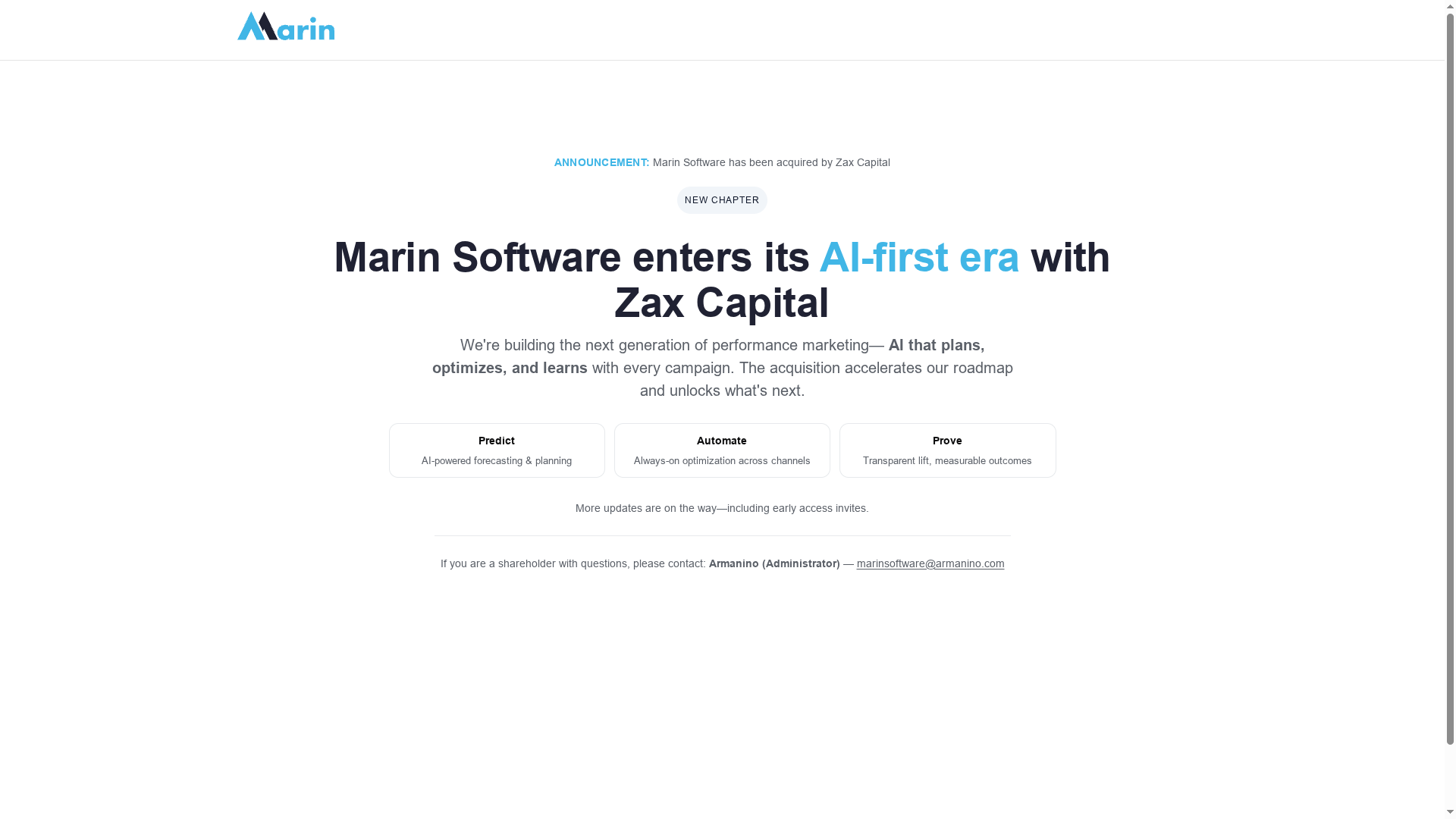
Marin Software is a performance-marketing platform now positioning itself as AI-first with backing from Zax Capital, focused on planning, optimisation and automation across search, social, retail and display. It combines forecasting, attribution analytics and cross-channel data integration to help marketers refine media mix and spend allocation. If you run medium to large ecommerce operations and need scalable automation, Marin delivers powerful capabilities — but it comes at a price and with implementation complexity. Worth considering.
Core Features
Marin offers AI-powered forecasting and planning, always-on automated optimisation across channels, transparent lift measurement and outcome-focused attribution, plus unified marketing-ecosystem tools and broad data integration from search, social, retail and display. The platform is designed to centralise data sources and surface actionable insights for goal meeting and media spend decisions, while its automation aims to expand advertising efforts without constant manual tuning.
Short and sharp.
Pros
Strong AI and automation features: The platform’s AI forecasting and automated bidding are core strengths that help reduce manual optimisation time.
Comprehensive data integration and analytics: Marin ingests multiple channels and produces attribution insights that support smarter media-mix decisions.
Flexible contract terms: You can choose month-to-month or annual arrangements, which makes scaling or pausing investment less rigid.
Scalable across channels: The solution is built to handle search, social, retail and display campaigns concurrently, which suits multi-channel marketers.
Good data retention and refresh rates: Reliable refresh cadence and retention practices mean your historical performance is available for forecasting and trend analysis.
Cons
Pricing may be high for small or new businesses: The entry point of $500/month could be a barrier for startups and smaller merchants.
Complex setup and integration process: Getting all data sources unified and models tuned can require technical expertise and time.
Not transparent about larger-scale pricing: Detailed costs for advanced or enterprise automation features are quoted on request, which makes budgeting harder.
Not for everyone.
Who It’s For
Marin Software is aimed at medium to large businesses and ecommerce retailers running performance marketing across multiple channels who need advanced automation and AI-driven insights. If you manage substantial media spend and value granular attribution and forecasting, Marin is a fit; if you are solo or small‑budget, it may be overkill.
Unique Value Proposition
Marin differentiates by combining end-to-end forecasting, measurable lift and cross-channel automation into one platform, helping marketers translate integrated data into smarter spend allocation. The AI-first positioning and publisher automation options target teams that want to move from reactive bidding to proactive, forecast-led planning.
Real World Use Case
A retail company uses Marin to unify search, social and retail platform data, run AI forecasts, and automate bidding across channels. The result: tighter media-mix decisions, fewer manual bid adjustments, and clearer attribution of what drives sales — enabling the team to scale campaigns with greater confidence.
Pricing
Starting at $500/month for the connectAscendOne package, with customised quotes available for automated publisher management and advanced solutions.
Website: https://marinsoftware.com
Skai
At a Glance
Skai is an AI-powered commerce media platform built to centralise marketing data and activate campaigns across retail, search, social and content channels. It excels at joining publishers, retailers and operational workflows so larger advertisers can run omnichannel strategies from a single place. Expect powerful automation and AI recommendations, but also a platform that assumes a significant budget and some onboarding effort.
Core Features
Skai brings together omnichannel activation, data centralisation, back-end automation and an AI agent called Celeste AI. The platform connects publishers and retailers, consolidates marketing data, and activates campaigns across retail media, search and social. Operational tools such as ticketing, revenue recovery and retail-readiness automation sit alongside proactive AI insights and recommendations to speed decision-making and continuous optimisation.
Pros
Wide publisher and channel coverage: Skai connects to over 100 publishers and channels, enabling genuinely omnichannel campaign execution from one platform.
AI-driven insights and automation: Celeste AI provides proactive recommendations and continuous support, which can reduce manual analysis and speed optimisation cycles.
Transparent, tiered pricing model: Pricing tiers tied to ad spend give predictable billing and clearer expectations for larger advertisers.
Proven industry adoption: Being trusted by over 8,200 brands demonstrates scale and maturity in enterprise deployments.
Customisable enterprise support: The platform offers tailored solutions and high-level support suited to complex, large-scale advertising needs.
Cons
High cost for smaller teams: Pricing that starts at six figures per year may put the platform out of reach for smaller businesses or those with constrained budgets.
Steep learning curve: The breadth and depth of features mean new users may face a significant onboarding period before real value is realised.
Reliance on third-party platforms: Dependence on external publishers and retailers can affect data sharing and privacy boundaries, which adds complexity to governance and compliance.
Who It’s For
Skai is aimed squarely at large brands and agencies with substantial advertising budgets (up to and beyond $20M annually) that need to streamline omnichannel marketing. If you run complex retail-media and cross-channel campaigns and have the resources for enterprise tooling and implementation, Skai is built for your scale and sophistication.
Unique Value Proposition
Skai’s unique value lies in combining deep publisher connectivity with AI-driven automation and centralised marketing data. For advertisers who must coordinate retail, media and content channels at scale, the platform reduces friction between data, activation and operations, enabling faster, more informed decisions.
Real World Use Case
A major consumer goods brand centralises all marketing data in Skai, deploys campaigns across retail, search and social, and uses Celeste AI for real-time optimisation and strategic recommendations. The brand realises clearer visibility across channels, improved return on ad spend and lowered cost-per-click as campaigns are continuously refined.
Pricing
Starting at $95,000/year, with tiers such as Standard, Advanced, Enterprise and Premier based on annual ad spend; bespoke pricing is available for very large budgets (for example, upwards of $35 million).
Website: https://skai.io
Adzooma
At a Glance
Adzooma is an online marketing platform built to simplify multi-channel PPC management across Google, Microsoft and Facebook ads. It combines quick account audits with AI-driven recommendations to help you spot optimisation opportunities and act on them with minimal fuss. If you want straightforward automation, readable performance reports and a path to faster decisions, Adzooma delivers — though power users may find advanced features gated behind higher tiers. A practical choice for busy marketers and small agencies.
Core Features
Adzooma’s core capabilities centre on campaign diagnostics and automation: AI-driven PPC recommendations that surface optimisation opportunities, rapid full-account audits and performance reports, SEO and web metrics reports to diagnose site issues, and two-click recommendations designed for easy implementation. The platform integrates multiple ad channels so you can compare and act on cross-network signals without juggling separate dashboards.
Pros
User-friendly interface and easy to use: The platform is designed so marketers can run audits and apply suggestions quickly, reducing time spent on routine tasks.
Provides actionable recommendations and insights: AI-driven suggestions identify specific PPC opportunities, helping you prioritise changes that are likely to improve ROI.
Supports multiple advertising channels: Native support for Google, Microsoft and Facebook ads lets you manage multi-channel campaigns from a single place.
Offers both free and paid plans with scalable options: Whether you’re a solo marketer or a small agency, there’s a tier that fits your budget and needs.
Helps automate and optimise ad campaigns efficiently: Two-click recommendations and automated reporting take repetitive work off your plate and free time for strategy.
Cons
Pricing may be limited for advanced features in lower-tier plans: Several more sophisticated capabilities appear reserved for Silver, Gold or custom enterprise plans rather than the free tier.
Dependent on account integration for recommendations and insights: The quality of suggestions relies on integrating your ad accounts and site metrics, so disconnected accounts limit usefulness.
May require some familiarity with digital marketing concepts: Beginners will benefit from the automation, but a basic understanding of PPC and SEO helps to interpret and act on the recommendations.
Who It’s For
Adzooma suits digital marketers, PPC professionals, SMBs, startups and small agencies that need a practical, time-saving toolkit for multi-channel paid advertising. If you manage several client accounts or campaigns and want faster audits and clear next steps, this platform will streamline your workflow without a steep learning curve.
Unique Value Proposition
Adzooma’s strength is turning complex account data into immediate, implementable actions: think fast audits, AI-suggested optimisations and two-click fixes across multiple ad networks. It’s built for speed and clarity rather than deep, custom-built campaign engineering.
Real World Use Case
A small digital agency uses Adzooma to run weekly account audits across client portfolios, receive tailored recommendations for keyword and bid adjustments, and export automated reports — saving hours each week and increasing campaign ROI through steady, incremental improvements.
Pricing
Free tier available; paid plans from £69/month (Silver) and £179/month (Gold), with annual billing options and custom enterprise pricing.
Website: https://adzooma.com
SEMrush
At a Glance
SEMrush is an all-in-one marketing toolkit used by over 10 million marketing professionals to grow online visibility across SEO, content, advertising and social channels. It combines a vast keyword and backlink database with AI-powered insights to help you plan campaigns, audit sites and monitor competitors. For ecommerce owners who need a single platform that covers SEO, PPC planning and social monitoring, SEMrush is a powerful, data-driven choice — though it can feel feature-heavy for smaller teams.
Core Features
SEMrush bundles SEO analysis, keyword research, backlink and traffic potential estimation, technical site audits and rank tracking with competitor analysis for both organic and paid campaigns. It also supports content creation and optimisation with AI-driven content ideas and real-time scoring, social media scheduling and brand monitoring, advertising campaign planning and ad-strategy analysis, PR monitoring and local SEO tools (including Google My Business optimisation and directory insights). Across these modules, AI-powered tips aim to turn raw data into actionable steps.
Worth noting.
Pros
Comprehensive toolset: SEMrush covers SEO, content, PPC, social and local marketing in one platform, reducing the need for multiple subscriptions.
Advanced AI capabilities: The platform’s AI search features help surface deeper insights and prioritise opportunities for optimisation.
Extensive data coverage: A vast database of keywords and backlinks gives you broad visibility into market and competitor behaviour.
User-friendly interface: Despite the breadth of features, the interface and tools are designed to be intuitive for marketing professionals.
Trusted at scale: Its adoption by a large number of professionals and enterprises underlines its maturity for serious digital marketing work.
Cons
Cost can be prohibitive: SEMrush can be expensive for small ecommerce businesses or solo practitioners with tight budgets.
Steep learning curve: The extensive feature set may require time and training before teams can use it effectively.
Potentially overwhelming: For users without prior digital marketing knowledge, some modules and reports can feel dense and difficult to interpret.
Stop. Consider this.
Who It’s For
SEMrush is aimed at digital marketing professionals, SEO specialists, content marketers, agencies and enterprise teams that need a data-rich, consolidated platform. If you run an ecommerce store with growth ambitions and either in-house marketing resource or an agency partner, SEMrush gives the breadth and depth required to compete on search and advertising channels.
Unique Value Proposition
SEMrush’s unique strength is the combination of an all-in-one toolkit with AI-driven analysis and one of the largest keyword and backlink databases available. That mix helps you move from discovery (what competitors rank for) to execution (SEO fixes, PPC planning and content creation) without stitching multiple tools together.
Real World Use Case
An ecommerce business uses SEMrush to map competitors’ organic and paid keywords, run technical audits to improve site health, optimise product pages with SEO-ready content suggestions, monitor brand mentions on social media and plan targeted advertising campaigns to drive sales.
Pricing
Pricing details are available on the SEMrush website and typically involve different tiers or packages based on the features and usage levels (specific prices are provided on the vendor site).
Website: https://semrush.com
Optmyzr

At a Glance
Optmyzr is a dedicated PPC management platform built to help paid-media teams automate and optimise search, shopping, social and Amazon advertising. It combines real-time monitoring, automated rules and AI recommendations to reduce manual work and sharpen performance. For agencies and in-house teams handling multiple accounts, it accelerates reporting and campaign launches; however, smaller advertisers may find the price and complexity a barrier.
Core Features
Optmyzr’s toolset centres on automation and cross-platform control: real-time campaign monitoring, automated rules and alerts, account audits and performance reporting, keyword and search query optimisation, and both manual and automated bid management. It also covers Shopping/Pmax campaign management, cross-platform budget management, performance insights and benchmarking, plus AI-powered recommendations. The platform integrates with Google Ads, Microsoft Ads, Amazon Ads and other channels to provide a single operational view.
Pros
Comprehensive automation and rule engine: Optmyzr lets you automate repetitive tasks and trigger alerts, cutting manual campaign maintenance.
Enhanced reporting and analytics: The platform produces account audits and detailed performance reports that make client reporting faster and clearer.
Supports multiple advertising platforms: You can manage Google, Microsoft and Amazon campaigns from the same interface, reducing tool sprawl.
Strong customer support and onboarding: The product is noted for customer support that helps teams get up to speed and implement best practice.
Widely used and trusted by agencies and marketers: Its adoption by agencies suggests reliability and suitability for multi-account workflows.
Cons
Pricing may be high for small businesses: The entry price point and tiered features can put the full toolkit out of reach for smaller advertisers.
Complexity could be overwhelming for beginners: The breadth of features and automation options may require training before non-experts can use it confidently.
Some features require higher-tier plans: Access to advanced capabilities is gated behind upper-tier or custom plans, limiting functionality for lower-cost subscriptions.
Who It’s For
Optmyzr is designed for digital marketing teams, PPC agencies and in-house marketers who manage multiple ad accounts and want to scale via automation and better insights. If you run several client accounts or combine Google and Amazon advertising, Optmyzr is aimed at reducing operational friction and improving campaign consistency.
Unique Value Proposition
Optmyzr’s unique value lies in bringing automation, cross-platform management and robust reporting together in one PPC toolkit, backed by AI-driven recommendations. That blend helps teams move faster from diagnosis to action, standardising processes and shortening the time between insight and optimisation.
Real World Use Case
A digital marketing agency uses Optmyzr to automate bid adjustments across client accounts, generate detailed performance reports for weekly client reviews, and accelerate the rollout of new campaign types across Google and Amazon — all with far less manual intervention than before.
Pricing
Starting at $209 per month for the complete PPC toolkit; discounts available for annual billing and higher ad spend levels; custom plans for enterprise.
Website: https://optmyzr.com
Digital Marketing Tools Comparison
This table provides a comprehensive comparison of various digital marketing tools, highlighting their core features, pros, cons, target audience, and pricing to help you make informed decisions.
Product | Core Features | Pros | Cons | Pricing |
I Want To Be Seen | Integrated SEO, social media, PPC, and website optimization | Complete solution, experienced leadership, growth focus | Pricing not specified | Not Specified |
Google Ads | Search, display, video campaigns, AI-driven optimization | Wide campaign formats, ecosystem integrations, robust AI | Complex for new users, high potential cost | Pay-per-click, variable |
Microsoft Advertising | Multi-format ads including search, display, video | Extensive reach, AI-assisted ad creation, support | Accessibility issues, requires login | Pay-per-click |
Marin Software | AI forecasting, cross-channel automation | Strong AI features, comprehensive data integration, flexible contracts | High pricing, complex setup | Starting at $500/month |
Skai | Omnichannel activation, AI-driven automation | Wide channel coverage, proactive AI insights | High cost, steep learning curve | Starting at $95,000/year |
Adzooma | PPC management across Google, Microsoft, Facebook | User-friendly, actionable insights, multi-channel support | Limited features at lower tiers | Free plan available, paid plans from £69/month |
SEMrush | SEO, content, advertising analytics | Comprehensive toolset, trusted by professionals | High cost, steep learning curve | Pricing available on SEMrush website |
Optmyzr | PPC automation, cross-platform management | Strong automation, enhanced reporting | High pricing, complex for beginners | Starting at $209/month |
Elevate Your Ecommerce PPC Strategy with Expert Guidance
Navigating the complexities of ecommerce PPC tools can be overwhelming. From mastering AI-driven optimisation to managing multi-channel campaigns, the challenges are real and the stakes are high. If you are aiming to boost conversions while controlling costs and want a strategic partner who understands these nuances, you are not alone. Key concerns like campaign management, budgeting, and integrated digital marketing demand a clear, growth-focused approach.
At I Want To Be Seen, we combine over 25 years of practical ecommerce experience with specialised expertise in SEO, AI, Social Media and PPC. Our focused, hands-on leadership delivers bespoke marketing plans where every channel works together seamlessly. Whether you are weighing options among top PPC platforms or seeking to scale your store without juggling multiple agencies, discover how our tailored strategies can reduce complexity and speed your path to results. Start your journey by exploring how we create clarity and impact in ecommerce marketing with our professional services and proven mentorship that turns insights into action.

Take charge of your ecommerce growth now with a partner who understands the demands of PPC and beyond. Visit I Want To Be Seen to schedule a consultation and unlock your online store’s full potential today.
Frequently Asked Questions
What features should I look for in ecommerce PPC tools for 2025?
Focus on features that enhance automation, like real-time bid adjustments and robust reporting. Look for tools that offer cross-platform integration to manage multiple ad channels from one place.
How can I determine which PPC tool is right for my ecommerce business?
Evaluate your business needs and budget to identify essential features such as campaign automation, performance analytics, and user-friendly interfaces. Once identified, test a few tools through free trials to gauge usability and fit.
What is the average cost range for ecommerce PPC management tools?
Costs typically vary based on features and scale, ranging from free basic options to several hundred dollars per month for advanced toolsets. Identify your budget first, and consider both upfront and ongoing costs of the tools you shortlist.
How long does it take to see results from implementing a new PPC tool?
Generally, you can expect to see initial results within 30 to 60 days after setup and optimization. To maximize your investment, continuously monitor performance and adjust your strategies based on data-driven insights.
Can ecommerce PPC tools help improve ROI for my online store?
Yes, effective PPC tools can optimize ad spending, enhance targeting, and streamline campaign management, leading to a better return on investment. Regularly analyze your metrics to ensure you are improving in areas like click-through rates and conversion rates.
How can I automate my PPC campaigns using these tools?
Most PPC tools feature automation capabilities like rules for bid adjustments, ad scheduling, and performance alerts. Set up these features early to reduce manual workload and focus on strategic decision-making.
Recommended
Comments