.png)
Seasonal Marketing – Driving Peak eCommerce Sales


Nearly 40 percent of british eCommerce businesses see their highest revenue spikes during key seasonal events. For managers with a few years of experience, timing campaigns around spring launches or summer holidays can change your year’s performance. Understanding how customer behaviour shifts across the year is essential for driving real engagement and staying ahead in the competitive UK and Ireland markets. This guide reveals how strategic seasonal marketing taps into these trends to increase sales and strengthen brand loyalty.
Table of Contents
Key Takeaways
Point | Details |
Seasonal Marketing Strategy | Align marketing efforts with seasonal events to enhance consumer engagement and drive sales. |
AI-Driven Personalisation | Utilise advanced AI technologies to create tailored consumer experiences and optimise campaign effectiveness. |
Compliance and Ethical Marketing | Implement rigorous compliance measures and ethical practices to build consumer trust and mitigate reputational risks. |
Marketing Calendar Development | Develop a seasonal marketing calendar to plan promotional activities effectively and respond to market changes swiftly. |
Defining Seasonal Marketing for eCommerce
Seasonal marketing represents a strategic approach where businesses purposefully align their marketing efforts with specific temporal moments that influence consumer purchasing behaviour. Seasonal marketing strategies capitalise on predictable shifts in consumer demand driven by holidays, cultural events, weather patterns, and annual traditions.
At its core, seasonal marketing involves tailoring promotional campaigns, product offerings, and messaging to resonate with the unique characteristics of distinct periods throughout the year. This approach goes beyond simply adding festive decorations to existing marketing materials; it requires deep understanding of how consumer psychology and purchasing motivations transform across different seasons. Retailers can craft compelling narratives that connect emotionally with customers by recognising and responding to seasonal context.
The fundamental objectives of seasonal marketing include:
Generating heightened consumer interest during specific timeframes
Creating sense of urgency through limited time promotions
Increasing customer engagement and website traffic
Developing stronger emotional connections with target audiences
By strategically leveraging seasonal opportunities, eCommerce businesses can unlock significant revenue potential and differentiate themselves in competitive marketplaces.
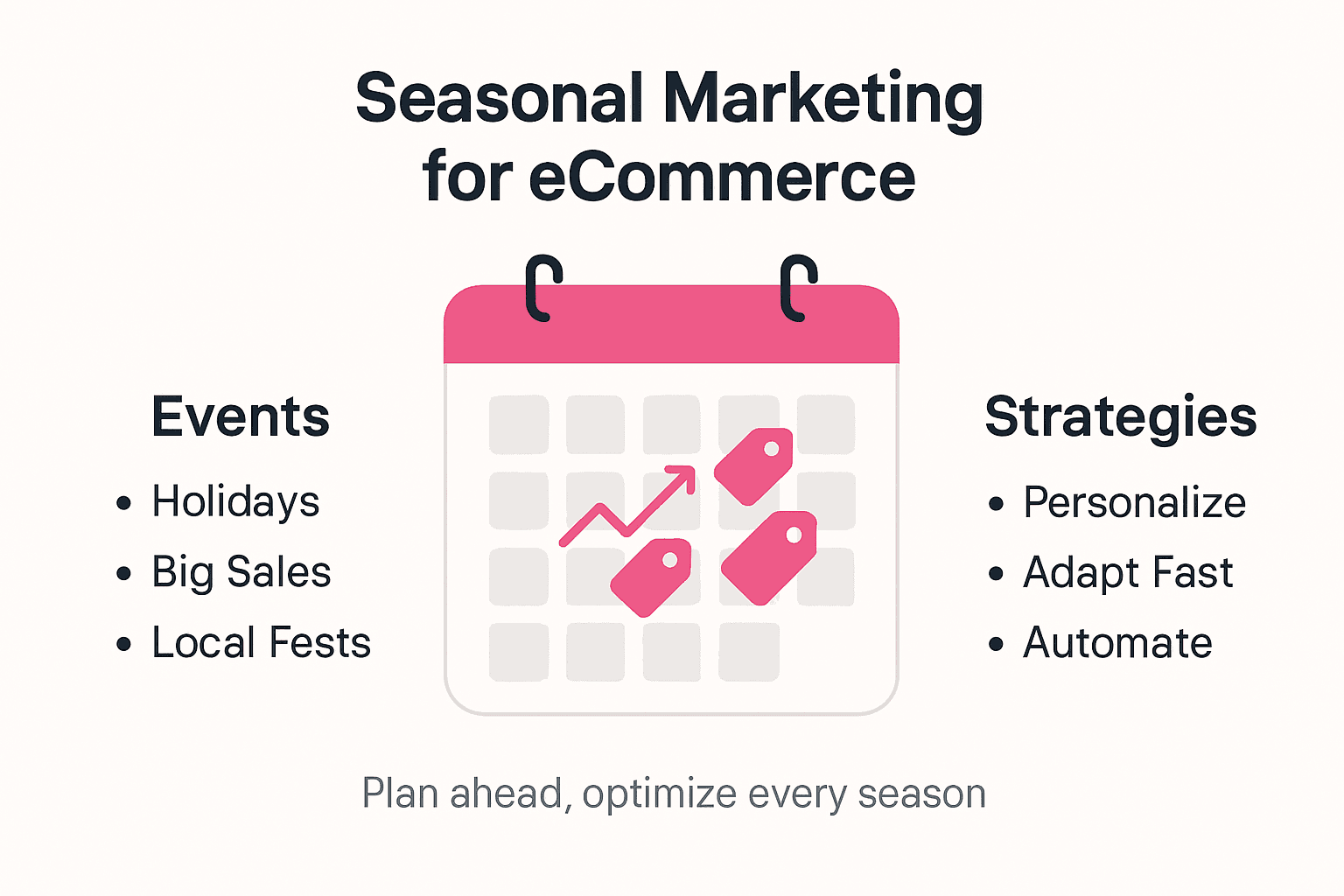
Pro tip: Develop a comprehensive seasonal marketing calendar that maps out key events, holidays, and potential promotional windows at least three months in advance to ensure smooth campaign planning and execution.
Major Types and Key Events in 2025
The landscape of seasonal marketing in 2025 is evolving dramatically, driven by technological innovation and shifting consumer expectations. Emerging marketing trends reveal a complex ecosystem of global and regional events that savvy eCommerce businesses must strategically navigate.
Seasonal marketing campaigns in 2025 will be characterised by distinct thematic periods that blend traditional holiday moments with cutting-edge technological approaches. Key events will span multiple categories:
Cultural and Heritage Celebrations
Black History Month in February
Pride Month in June
Various national and international cultural observances
Sustainability-Focused Periods
Earth Month in April
World Environment Day
Campaigns emphasising carbon-neutral initiatives
Health and Wellness Themed Campaigns
New Year wellness promotions
Mental Health Awareness periods
Fitness and lifestyle transformation events
Technology and Innovation Milestones
Virtual pop-up shopping experiences
AI-driven personalised marketing campaigns
Digital celebration events
Hyper-personalised marketing strategies will leverage advanced AI technologies to create deeply customised consumer experiences. Businesses can now develop localised content and personalised product bundles that resonate specifically with individual customer segments.

Pro tip: Create a flexible digital marketing calendar that allows rapid adaptation to emerging trends, with at least 20% capacity reserved for spontaneous, data-driven campaign adjustments.
Here is a comparison of major seasonal marketing periods and their eCommerce opportunities for 2025:
Seasonal Period | Example Events | Typical eCommerce Opportunity | Recommended Strategy |
Cultural & Heritage | Pride Month, Black History | Promote themed products | Collaborative storytelling |
Sustainability-Focused | Earth Month, Environment Day | Eco-friendly campaigns | Highlight green initiatives |
Health & Wellness | New Year, Wellness Season | Fitness and self-care promotions | Authentic influencer content |
Technology & Innovation | AI-driven events | Virtual pop-up shops | Personalised digital experiences |
How Seasonal Marketing Strategies Work
Seasonal marketing strategies operate through a sophisticated framework of anticipating, understanding, and responding to cyclical consumer behaviours and contextual market dynamics. Successful implementation requires businesses to develop comprehensive marketing approaches that align product offerings, messaging, and promotional tactics with specific temporal opportunities.
The core mechanics of seasonal marketing strategies involve several interconnected stages:
Market Research: Deeply analysing consumer behaviour patterns specific to different seasonal periods
Audience Segmentation: Identifying distinct customer groups with unique seasonal preferences
Campaign Development: Creating targeted messaging and promotional content
Timing Optimisation: Strategically scheduling marketing activities for maximum impact
Performance Tracking: Measuring and analysing campaign effectiveness
Technological advancements have transformed seasonal marketing from traditional calendar-based approaches to more nuanced, data-driven strategies. Modern businesses can now leverage advanced analytics, machine learning, and real-time consumer insights to craft hyper-personalised experiences that resonate with specific audience segments during particular seasonal moments.
Effective seasonal marketing requires businesses to move beyond generic promotions and develop narratives that genuinely connect with consumer emotions, aspirations, and contextual needs. This means creating campaigns that feel authentic, timely, and directly relevant to the customer’s current life stage and environmental context.
Pro tip: Develop a dynamic seasonal marketing framework that allows for rapid content customisation, enabling your business to pivot quickly based on real-time consumer engagement metrics.
AI and Personalisation Trends in Seasonal Campaigns
Artificial intelligence is fundamentally transforming seasonal marketing strategies, enabling unprecedented levels of consumer engagement and personalisation. Advanced AI-driven marketing technologies are revolutionising how businesses approach targeted seasonal campaigns, creating hyper-personalised experiences that resonate deeply with individual consumer preferences.
The core technological innovations driving AI personalisation in seasonal marketing include:
Predictive Analytics: Anticipating consumer behaviour patterns
Dynamic Content Generation: Creating real-time personalised messaging
Micro-Segmentation: Identifying and targeting extremely specific consumer groups
Contextual Recommendation Engines: Suggesting products based on seasonal relevance
Emotional Intelligence Algorithms: Understanding consumer sentiment and motivations
By leveraging sophisticated personalization strategies, businesses can craft seasonal marketing campaigns that feel individually tailored rather than generic. This approach goes beyond traditional demographic targeting, utilising machine learning to understand nuanced consumer preferences, purchasing patterns, and emotional triggers specific to different seasonal contexts.
The future of seasonal marketing lies in creating adaptive, intelligent campaign ecosystems that can instantaneously respond to changing consumer needs. AI enables marketers to move from broad-stroke seasonal strategies to precision-targeted experiences that feel intimately personal, increasing engagement, conversion rates, and long-term customer loyalty.
Pro tip: Invest in robust data infrastructure and AI training that allows continuous learning and adaptation of your seasonal marketing algorithms, ensuring ever-improving personalisation accuracy.
The following table summarises the impact of AI features on seasonal marketing personalisation:
AI Feature | Main Function | Business Benefit | Application in Campaigns |
Predictive Analytics | Forecast buying behaviour | Higher conversion rates | Timing promotions for key trends |
Dynamic Content | Real-time message tailoring | Deeper customer engagement | Personalised offers and emails |
Micro-Segmentation | Target niche audiences | Precise appeals | Bespoke product recommendations |
Emotion Algorithms | Gauge consumer sentiment | Improve loyalty | Adaptive narrative messaging |
Avoiding Common Pitfalls and Compliance Issues
Navigating the complex landscape of seasonal marketing requires a strategic approach that balances creative ambition with rigorous compliance and ethical considerations. Marketing channel strategies must be carefully designed to mitigate potential legal and reputational risks inherent in data-driven promotional campaigns.
Common pitfalls in seasonal marketing encompass several critical areas:
Data Privacy Risks
Inadequate consumer consent mechanisms
Insufficient data protection protocols
Unclear data usage communications
Regulatory Compliance
Breaching marketing communication regulations
Failing to meet industry-specific advertising standards
Mishandling personal consumer information
Ethical Marketing Challenges
Avoiding manipulative promotional tactics
Maintaining transparency in marketing messaging
Protecting vulnerable consumer segments
Successful seasonal marketing demands a proactive approach to risk management. This involves developing comprehensive internal guidelines that prioritise consumer trust, legal compliance, and ethical marketing practices. Businesses must invest in continuous staff training, robust technological safeguards, and transparent communication strategies that demonstrate genuine respect for consumer rights and expectations.
The most sophisticated seasonal marketing approaches integrate compliance directly into campaign design, treating regulatory requirements not as constraints but as opportunities to build deeper, more meaningful customer relationships. By embedding ethical considerations into every stage of campaign development, businesses can create marketing experiences that are not just legally sound, but genuinely customer-centric.
Pro tip: Conduct a quarterly comprehensive compliance audit of your seasonal marketing strategies, involving legal, marketing, and data protection specialists to identify and mitigate potential risks proactively.
Elevate Your Seasonal Marketing with Expert eCommerce Strategies
Seasonal marketing demands precision, personalised messaging and rapid adaptation to ever-changing consumer behaviours. If you find challenges in crafting authentic campaigns that harness AI personalisation and navigate compliance concerns you are not alone. Many businesses struggle to convert seasonal opportunities into peak sales moments without the right digital marketing framework. With over 25 years of experience scaling eCommerce brands we understand how to align SEO PPC and social media strategies with the seasonal shifts and innovative tactics discussed in this article.
Leverage proven expertise to:
Anticipate key seasonal buying cycles with data-driven insights
Build hyper-personalised campaigns that truly engage your audience
Boost conversion rates while maintaining full compliance and ethical standards
Take control of your seasonal success today by exploring our comprehensive digital marketing services designed specifically for eCommerce brands.

Ready to transform your eCommerce seasonal marketing into a dominant growth engine Act now and partner with us at iwanttobeseen.online to craft compelling stories and campaigns that convert. Discover hands-on expertise in SEO AI driven personalisation and social media strategies tailored for peak seasons. Don’t let another seasonal opportunity slip away unlock your business potential with our tailored solutions.
Frequently Asked Questions
What is seasonal marketing?
Seasonal marketing is a strategic approach where businesses align their marketing efforts with specific periods influenced by holidays, events, and consumer behaviour, aiming to boost sales during these times.
How can businesses effectively utilise seasonal marketing strategies?
Businesses can effectively utilise seasonal marketing by conducting thorough market research, segmenting their audience, developing targeted campaigns, optimising timing, and tracking performance to adjust their strategies accordingly.
What types of events are essential for seasonal marketing in 2025?
Essential events for seasonal marketing in 2025 include cultural celebrations like Pride Month, sustainability-focused periods such as Earth Month, health and wellness events like New Year promotions, and technology-driven innovations like virtual shopping experiences.
How does AI contribute to seasonal marketing personalisation?
AI contributes to seasonal marketing personalisation by enabling predictive analytics, dynamic content generation, micro-segmentation, and emotional intelligence algorithms, allowing businesses to create tailored marketing experiences that resonate with individual consumers.
Recommended
Comments