.png)
Social Commerce: Everything You Need to Know


Over 70 percent of british online shoppers have made purchases directly through social platforms, showing just how quickly buying habits are shifting. Social commerce is changing the way people in the UK discover, evaluate, and buy products, with shoppers now seeking personalised recommendations and real-time feedback from their networks. As brands adapt to this demand for interactive shopping, understanding what social commerce really means becomes key for anyone looking to stand out in today’s competitive market.
Table of Contents
Key Takeaways
Point | Details |
Social Commerce Definition | Social commerce merges social media and ecommerce, enabling direct sales through interactive platforms where consumers actively engage and influence purchasing decisions. |
Diverse Formats | Various social commerce formats, such as social shopping and group buying, offer unique consumer engagement strategies that enhance purchasing experiences. |
Operational Mechanisms | Social commerce operates by embedding shopping within social networks, using peer recommendations to drive trust and influence purchases. |
Legal Considerations | Brands must navigate complex legal issues related to data privacy and consumer protection, necessitating robust compliance strategies to mitigate risks. |
What Social Commerce Means
Social commerce represents a groundbreaking fusion of social media interaction and electronic commerce, enabling businesses to transform digital social platforms into direct sales channels. According to aasrc, social commerce is a subset of e-commerce that integrates social media platforms to facilitate online buying and selling, empowering consumers to generate content, share information, and optimise purchasing decisions.
At its core, social commerce goes beyond traditional online shopping by embedding interactive, community-driven experiences directly into the purchasing journey. Wikipedia defines it as the convergence of social networks and e-commerce, where social interaction and user contributions assist in online product transactions. This means customers aren’t just passive buyers but active participants who share opinions, recommendations, and real-world experiences that influence purchasing behaviours.
The mechanism of social commerce involves several key elements:
Direct purchasing through social media platforms
User-generated product reviews and recommendations
Integrated shopping experiences within social networks
Real-time customer feedback and engagement
Seamless transition from product discovery to purchase
For ecommerce businesses looking to leverage social commerce, understanding its nuanced approach is crucial. Check out our guide on the role of social media in ecommerce to dive deeper into these emerging digital marketing strategies.
Different Social Commerce Formats
Social commerce has evolved into a multifaceted digital ecosystem with diverse formats designed to engage consumers through interactive and personalised shopping experiences
VIDEO:video_content]. According to [Wikipedia, these formats include social network-driven sales, peer-to-peer platforms, group buying, and user-curated shopping strategies that leverage various aspects of social interaction to facilitate commerce.
Each format offers unique approaches to blending social engagement with purchasing opportunities.
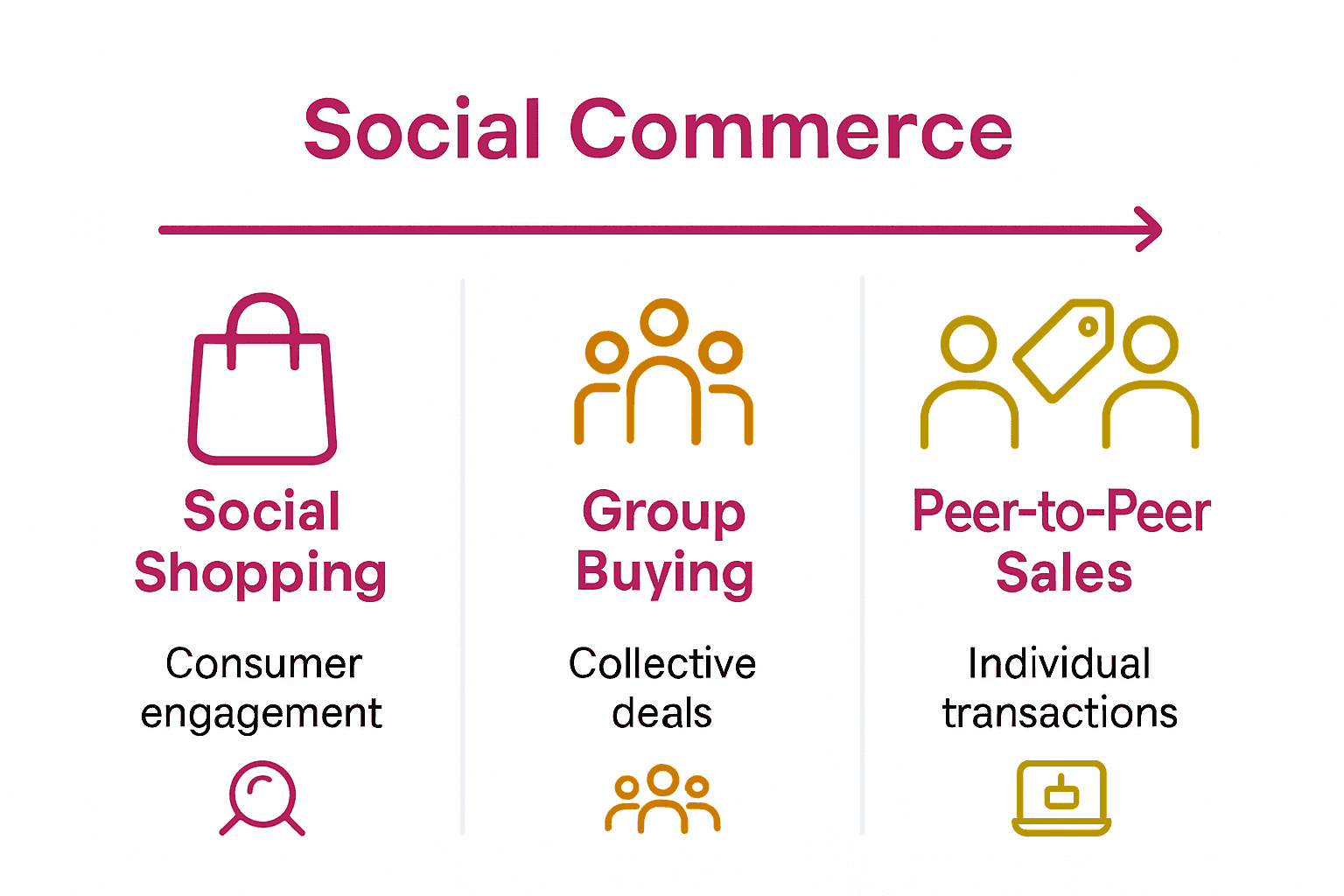
SCIRP highlights several key social commerce formats that have transformed how consumers discover, evaluate, and purchase products:
Social Shopping: Collaborative online shopping experiences where users share product recommendations
Group Buying: Collective purchasing that offers discounts based on minimum participant numbers
Peer-to-Peer Sales: Direct transactions between individual users within social platforms
Participatory Commerce: Platforms where consumers actively contribute to product design and selection
Recommendation Networks: Communities that share authentic product reviews and personal experiences
Understanding these diverse formats is crucial for ecommerce businesses seeking to expand their digital reach.

When considering your social commerce strategy, exploring the types of social ads for ecommerce owners can provide additional insights into effective digital marketing approaches.
How Social Commerce Operates
Social commerce represents a sophisticated digital ecosystem where traditional shopping intersects with social media interactions. ArXiv reveals that these platforms fundamentally operate by embedding shopping experiences within social networks, where users can recommend products directly to their social contacts, leveraging trust and shared identity to influence purchasing decisions.
The operational mechanics of social commerce are deeply rooted in social relationships and peer recommendations. According to research from ArXiv, platforms like Beidian have pioneered models where individual users can transform into micro-sellers, promoting products within their personal networks and blending social connections with economic transactions.
Key operational components of social commerce include:
Integrated purchasing functionalities within social platforms
User-generated product recommendations
Direct messaging for product inquiries
Peer reviews and social validation
Seamless transaction processes
Personalised shopping experiences
To gain deeper insights into leveraging digital marketing strategies, explore our comprehensive guide on social media marketing and understand how these innovative approaches can transform your ecommerce engagement.
Key Benefits For Ecommerce Brands
Social commerce represents a transformative strategy for ecommerce brands seeking to expand their digital reach and engagement. MDPI highlights that these platforms offer substantial benefits, including enhanced consumer engagement, increased trust through peer recommendations, and sophisticated targeted marketing capabilities that traditional sales channels cannot replicate.
Research from ArXiv reveals that social commerce enables brands to reach previously underserved communities, fostering inclusivity and discovering new market segments through inherently social interactions. By integrating social elements into their sales strategies, brands can create more dynamic, interactive purchasing experiences that go beyond transactional relationships.
Key benefits for ecommerce brands include:
Direct audience connection and real-time feedback
Authentic social proof through user-generated content
Reduced customer acquisition costs
Increased brand loyalty and community building
Enhanced personalisation of marketing efforts
Expanded market reach through social networks
For ecommerce entrepreneurs looking to refine their digital strategy, understanding the nuanced approach to brand building is crucial. Explore our comprehensive guide on ecommerce branding tips to learn how to leverage these innovative marketing approaches effectively.
Legal Risks And Compliance Needs
Social commerce introduces a complex landscape of legal considerations that ecommerce brands must carefully navigate. IJSSHR highlights critical legal risks surrounding consumer protection, data privacy, and advertising standards, emphasising the need for comprehensive compliance strategies across digital platforms.
According to research from SCIRP, e-commerce brands must be particularly vigilant about legal compliance in social commerce, addressing multifaceted challenges including intellectual property rights, consumer data protection, and stringent advertising law adherence. These challenges require proactive risk management and robust legal frameworks to mitigate potential liabilities.
Key legal and compliance considerations include:
Transparent data collection and usage policies
Adherence to consumer protection regulations
Proper management of user-generated content
Protection of intellectual property rights
Compliance with advertising and marketing standards
Secure handling of financial transactions
Age verification and consent mechanisms
Clear terms of service and privacy agreements
To gain deeper insights into navigating the digital marketing landscape, explore our comprehensive guide on social media marketing to understand the nuanced legal and strategic considerations for modern ecommerce brands.
Alternatives To Social Platforms
Ecommerce brands seeking diverse channels beyond traditional social media platforms have multiple strategic alternatives to explore. Wikipedia suggests leveraging decentralized networks and peer production models, which offer enhanced control over content and transaction processes, providing businesses with more autonomy in their digital commerce strategies.
According to research from Wikipedia, specialized electronic markets present robust alternatives to social media-based commerce, focusing on direct consumer engagement through dedicated platforms that prioritise transactional efficiency and targeted interactions. These alternatives enable businesses to create more structured, purpose-built environments for commercial exchanges.
Key alternatives to social platforms include:
Dedicated e-commerce marketplaces
Specialised industry-specific platforms
Direct-to-consumer websites
Peer-to-peer selling networks
Niche online community platforms
Independent digital storefronts
Subscription-based commerce platforms
Blockchain-enabled transaction networks
To explore comprehensive digital marketing strategies that extend beyond traditional social platforms, check out our guide on social media marketing to understand the evolving landscape of online commerce.
Harness the Power of Social Commerce to Transform Your eCommerce Success
Navigating the evolving landscape of social commerce can feel overwhelming with its complex formats and legal challenges. If you are seeking to boost consumer engagement, enhance brand loyalty and leverage authentic peer recommendations then understanding these dynamics is crucial. Key terms like user-generated content, micro-sellers and integrated purchasing can unlock new growth avenues but require expert strategy and execution.

Ready to elevate your brand by mastering social commerce strategies Our specialised digital marketing services at iwanttobeseen.online combine over 25 years of eCommerce success with advanced SEO AI and social media expertise. Discover tailored solutions to reduce customer acquisition costs and create immersive personalised shopping experiences Visit our guide on social media marketing and explore practical ecommerce branding tips to get started. Take action now to connect authentically with your audience and drive sales like never before.
Frequently Asked Questions
What is social commerce?
Social commerce is a blend of social media interaction and e-commerce, enabling users to buy and sell directly through social platforms while engaging in community-driven experiences.
How do different social commerce formats work?
Social commerce formats include social shopping, group buying, peer-to-peer sales, participatory commerce, and recommendation networks, each offering unique approaches to enhance user engagement and purchasing experiences.
What are the benefits of using social commerce for e-commerce brands?
Key benefits for e-commerce brands include increased consumer engagement, authentic social proof, reduced customer acquisition costs, enhanced personalisation of marketing efforts, and expanded market reach through social networks.
What legal risks should e-commerce brands consider in social commerce?
E-commerce brands must navigate legal considerations such as consumer protection, data privacy, and compliance with advertising standards, necessitating robust policies and risk management strategies.
Recommended
Comments