.png)
What is web personalisation: boost UK e-commerce engagement
- Darren Burns
- Mar 23
- 9 min read


Many UK e-commerce owners believe web personalisation is simply showing targeted ads or using a customer’s name in emails. In reality, modern web personalisation leverages real-time behavioural data and AI to dynamically adapt every aspect of the shopping experience, from product recommendations to pricing. British retailers implementing sophisticated personalisation strategies report conversion rate increases of 25% and average order value uplifts exceeding 15%. This guide explains what web personalisation truly is, how it works, and why it matters for your online store’s growth in 2026.
Table of Contents
Key Takeaways
Point | Details |
Web personalisation defined | Modern web personalisation uses real time behavioural data and AI to tailor every aspect of the shopping experience, not just ads or customer names. |
Listen Think Act Learn cycle | The Listen Think Act Learn cycle underpins real time adaptation, with signals listened to, AI predicting intent, actions adjusting content in milliseconds, and outcomes informing ongoing refinement. |
Personalisation methods and approaches | Common methods span rule based logic, AI driven recommendations, cohort targeting, and omnichannel integration to maintain consistency across touchpoints. |
UK Ireland benchmarks | British retailers implementing sophisticated personalisation report conversion rate increases of around 25 per cent and average order value uplifts exceeding 15 per cent. |
Privacy and ethics | Ethical and privacy considerations include ensuring consent, transparency in data use, minimising data collection, and compliance with applicable regulations. |
Understanding web personalisation and how it works
Web personalisation operates through continuous real-time data collection of customer behaviour, contextual signals, and preferences. Every click, scroll, product view, and purchase feeds into sophisticated AI systems that build predictive models of what each visitor wants to see next. This isn’t guesswork or simple segmentation. Machine learning algorithms process millions of data points to identify patterns invisible to human analysts.
The Listen-Think-Act-Learn cycle forms the operational backbone. Systems listen to behavioural signals like time on page, cart additions, and navigation patterns. They think by applying AI models to predict intent and preferences. They act by dynamically adjusting content, recommendations, and offers in milliseconds. Finally, they learn by measuring outcomes and refining predictions continuously.
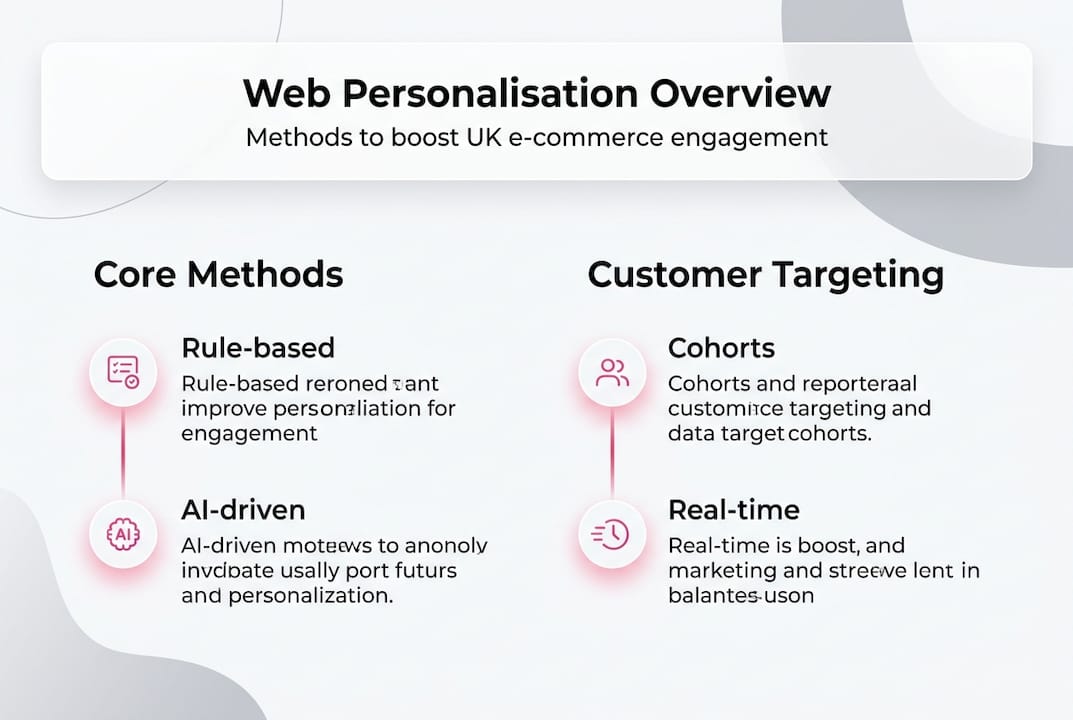
Common personalisation methods include rule-based systems using explicit if-then logic, AI-driven recommendation engines, cohort targeting based on shared characteristics, and omnichannel integration that maintains consistency across touchpoints. Each approach suits different business stages and objectives. Rule-based systems work well for straightforward scenarios like showing winter coats to visitors browsing outerwear. AI-driven methods excel at complex pattern recognition, predicting which obscure product a customer might love based on subtle behavioural similarities to other shoppers.
The role of AI in marketing has transformed personalisation from batch-processed email campaigns to instant, contextual adaptation. Modern systems adjust homepage layouts, search results, product descriptions, and even checkout flows based on individual visitor profiles. This creates shopping experiences that feel intuitive and relevant rather than generic.
Pro Tip: Start by personalising your homepage hero section and product recommendations. These high-visibility areas deliver immediate impact whilst you build more sophisticated personalisation capabilities.
Key methodologies and strategies for effective personalisation
Rule-based personalisation establishes explicit conditions and outcomes. If a visitor views three dresses, show dress accessories. If cart value exceeds £100, display free shipping messaging. These systems require manual rule creation but offer predictable, transparent logic. They work brilliantly for straightforward scenarios where customer intent is clear from specific actions.
AI-driven personalisation uses machine learning for recommendations and dynamic pricing based on demand patterns, competitor pricing, and individual purchase probability. Collaborative filtering identifies customers with similar preferences and suggests products they’ve purchased. Content-based filtering analyses product attributes to recommend similar items. Deep learning models combine multiple signals to predict complex preferences that simpler algorithms miss.

Real-time personalisation adapts content instantly as visitors interact with your site. Batch processing updates customer profiles periodically, typically overnight, using aggregated behavioural data. Real-time systems respond to immediate context like current browsing session, weather, time of day, and device type. Batch systems leverage historical patterns and long-term preferences. Most effective strategies combine both approaches.
Cohort-based targeting segments customers by shared characteristics like purchase frequency, average order value, product category preferences, or lifecycle stage. New visitors see trust-building content and popular products. Returning customers see personalised recommendations based on browsing history. High-value customers receive exclusive offers and early access to new products. This approach balances personalisation sophistication with operational simplicity.
Omnichannel integration ensures consistent experiences across web, mobile apps, email, and physical stores when applicable. A customer browsing products on mobile should see relevant recommendations when they later visit your website. Cart contents, wish lists, and preferences synchronise across channels. This continuity builds trust and reduces friction throughout the customer journey.
Methodology | Best For | Complexity | Implementation Time |
Rule-based | Clear intent scenarios | Low | 2-4 weeks |
AI-driven recommendations | Complex pattern recognition | High | 2-3 months |
Cohort targeting | Lifecycle marketing | Medium | 4-6 weeks |
Real-time adaptation | Immediate context response | High | 3-4 months |
Omnichannel integration | Multi-touchpoint consistency | Very High | 4-6 months |
Pro Tip: Begin with cohort-based targeting to achieve quick wins whilst building data infrastructure for more sophisticated AI-driven personalisation later.
Personalised marketing ecommerce strategies layer multiple methodologies to create comprehensive customer experiences that adapt to both immediate context and long-term preferences.
Proven benefits and business impacts of web personalisation in UK and Ireland
British e-commerce retailers implementing sophisticated personalisation report substantial performance improvements. ChicBoutique.co.uk achieved a 25% conversion rate increase and 15% average order value uplift after deploying AI-driven product recommendations and dynamic homepage content. Halfords personalised experiences for 80% of website visitors, significantly reducing exit rates by showing relevant products and content matched to browsing behaviour.
Northern Ireland e-commerce benchmarks reveal revenue per visitor averaging £1.49, with 68% basket abandonment rates. Personalisation directly addresses these challenges by presenting more relevant products earlier in the customer journey and reducing decision fatigue through curated selections. Stores implementing personalised cart recovery campaigns recover 15-20% of abandoned baskets compared to 5-8% with generic reminder emails.
“Customers now expect personalised experiences. Retailers meeting these expectations see measurable revenue increases, whilst those delivering generic experiences lose sales to competitors offering more relevant shopping journeys.”
Mature personalisation strategies combining multiple methodologies achieve up to 40% revenue increases compared to non-personalised approaches. These results stem from higher conversion rates, increased average order values, improved customer retention, and greater lifetime value. Personalisation creates competitive advantages that compound over time as systems learn and refine predictions.
Key performance indicators showing personalisation impact include:
Conversion rate improvements of 15-25% within first six months
Average order value increases of 10-20% through relevant cross-sells
Customer retention rates improving 20-30% via tailored experiences
Email click-through rates doubling with personalised recommendations
Cart abandonment reduction of 10-15 percentage points
Metric | Before Personalisation | After Personalisation | Improvement |
Conversion Rate | 2.1% | 2.6% | +24% |
Average Order Value | £67 | £77 | +15% |
Revenue Per Visitor | £1.41 | £2.00 | +42% |
Cart Abandonment | 71% | 62% | -9pp |
Customer Retention | 28% | 36% | +29% |
Ecommerce marketing best practices UK Ireland increasingly centre on personalisation as a foundational capability rather than an advanced feature. Customers shopping personalised experiences spend more, return more frequently, and recommend stores to others at higher rates.
Challenges, privacy considerations and best practices for ethical personalisation
Privacy-first personalisation approaches using only consented first-party data prove 15-30% less effective initially compared to aggressive third-party data collection. However, they build customer trust that delivers superior long-term value through repeat purchases and positive word-of-mouth. GDPR compliance in the UK and Ireland requires explicit consent for data collection, transparent explanation of personalisation methods, and easy opt-out mechanisms.
Over-personalisation creates ‘creepy’ experiences that alienate customers. Showing a product seconds after someone viewed it elsewhere suggests invasive tracking. Referencing sensitive purchases in public channels breaches privacy expectations. Effective personalisation feels helpful rather than surveillance-based. The line between relevant and intrusive varies by customer, requiring careful monitoring of engagement metrics and feedback.
Stale data undermines personalisation effectiveness. A customer who purchased a washing machine doesn’t want washing machine recommendations for months afterwards. Systems must recognise purchase completion and shift to complementary products or different categories. Regular data refresh cycles and purchase confirmation triggers prevent irrelevant recommendations that frustrate customers.
Fairness in personalised pricing and offers presents ethical challenges. Charging different customers different prices based on predicted willingness to pay can feel exploitative. Excluding certain customer segments from promotions creates resentment when discovered. Transparent pricing with personalised product selection rather than personalised pricing maintains trust whilst delivering relevance.
Large language models processing customer data raise additional privacy concerns. These systems may inadvertently expose sensitive information or make inappropriate inferences. Human oversight remains essential to monitor personalisation outputs for accuracy, appropriateness, and ethical alignment. Regular audits identify problematic patterns before they damage customer relationships.
Best practices for ethical personalisation include:
Collect only data necessary for specific personalisation use cases
Provide clear explanations of how personalisation works and benefits customers
Offer granular privacy controls allowing customers to adjust personalisation levels
Implement data retention policies that delete information after defined periods
Conduct regular fairness audits to identify unintended discriminatory patterns
Maintain human review of AI-generated personalisation decisions
Pro Tip: Survey customers about their personalisation preferences. Many welcome relevant recommendations whilst rejecting aggressive retargeting. Understanding these boundaries prevents privacy backlash.
Omnichannel strategy ecommerce growth requires careful privacy governance as customer data flows across multiple touchpoints and systems.
Practical steps to implement web personalisation successfully
Successful personalisation implementation follows a structured progression from foundational data infrastructure through testing to scaled deployment.
Unify customer data using a Customer Data Platform that integrates behavioural signals from your website, email system, customer service platform, and any other touchpoints. This creates comprehensive customer profiles enabling sophisticated personalisation.
Define clear key performance indicators measuring personalisation impact. Track conversion rates, average order values, customer lifetime value, engagement metrics, and revenue per visitor. Establish baseline measurements before implementing personalisation to quantify improvements accurately.
Begin with high-impact, low-complexity personalisation like homepage hero section adaptation and product recommendation widgets. These deliver visible results quickly whilst you build capabilities for more sophisticated approaches. A/B test every personalisation tactic to validate effectiveness before full deployment.
Implement human oversight processes reviewing personalisation outputs for appropriateness, accuracy, and ethical alignment. Automated systems occasionally produce nonsensical or offensive recommendations. Regular review catches these issues before customers encounter them.
Monitor customer feedback and engagement metrics for signs of personalisation feeling intrusive. Declining email open rates, increased opt-outs, or negative reviews mentioning privacy suggest you’ve crossed into ‘creepy’ territory. Adjust personalisation aggressiveness based on this feedback.
Scale gradually from product recommendations to personalised search results, dynamic content, tailored email campaigns, and eventually full omnichannel experiences. Each expansion requires additional data integration, testing, and optimisation. Rushing creates technical debt and poor customer experiences.
Invest in ongoing optimisation as customer behaviours and preferences evolve. Personalisation isn’t a set-and-forget technology. Regular model retraining, A/B testing of new approaches, and performance analysis ensure continued effectiveness.
Pro Tip: Document your personalisation rules and AI model decisions. This transparency helps troubleshoot issues, ensures GDPR compliance, and facilitates team understanding of how systems work.
AI marketing strategies 2025 ecommerce growth increasingly emphasise personalisation as a core capability differentiating successful retailers from competitors delivering generic experiences.
How we can help you succeed with web personalisation
Implementing effective web personalisation requires expertise spanning data integration, AI model development, privacy compliance, and continuous optimisation. We specialise in helping UK and Ireland e-commerce businesses deploy personalisation strategies that boost engagement and revenue whilst respecting customer privacy.

Our team brings over 25 years of experience scaling successful e-commerce brands. We understand the unique challenges British retailers face with GDPR compliance, customer expectations, and competitive pressures. Our web personalisation solutions integrate seamlessly with your existing technology stack, unify customer data, and deploy AI-driven recommendations proven to increase conversions. Partner with us to transform your customer experience and accelerate growth through intelligent personalisation.
FAQ
What is the difference between rule-based and AI-driven web personalisation?
Rule-based personalisation uses fixed if-then logic where specific customer actions trigger predetermined responses. AI-driven personalisation employs machine learning to analyse patterns across millions of customer interactions, predicting preferences and adapting content dynamically without manual rule creation. AI approaches deliver more flexible, accurate personalisation that improves continuously as systems learn from outcomes.
How does web personalisation comply with GDPR in the UK and Ireland?
GDPR-compliant personalisation focuses on first-party data collected with explicit customer consent and transparent explanation of usage. Avoid processing sensitive personal data without specific permission, provide easy opt-out mechanisms, and implement data retention policies deleting information after defined periods. Regular privacy audits ensure ongoing compliance as personalisation capabilities expand.
What level of uplift can UK e-commerce stores expect from personalisation?
UK and Ireland retailers implementing sophisticated personalisation typically achieve 15-25% conversion rate increases and 10-15% average order value improvements within six months. Mature personalisation strategies combining multiple methodologies report up to 40% revenue growth. Results vary based on implementation quality, product categories, and baseline customer experience.
How can businesses avoid making personalisation feel intrusive or ‘creepy’?
Monitor customer feedback, engagement metrics, and opt-out rates for signs personalisation feels invasive. Focus on relevance rather than immediacy, avoid referencing sensitive purchases in public channels, and provide transparent explanations of how personalisation works. Offer granular privacy controls allowing customers to adjust personalisation levels according to their comfort. Test personalisation tactics with customer panels before full deployment to identify potential privacy concerns.
Recommended
Comments