.png)
How to Build Backlinks for Ecommerce: Step-by-Step Guide


A single high quality backlink can be up to 100 times more effective than a low value link in driving results for ecommerce websites. The way your site attracts and manages backlinks shapes its authority and search visibility. Mastering each stage of the link building process lets you uncover missed opportunities, produce content that draws real attention, and create partnerships that strengthen your online presence over time.
Table of Contents
Quick Summary
Key Point | Explanation |
1. Evaluate Your Backlink Profile | Analyze existing backlinks to find strengths and weaknesses, using tools like Ahrefs or SEMrush. |
2. Target High-Value Link Opportunities | Identify quality link sources in your industry; prioritize high authority and relevant sites. |
3. Create Link-Worthy Content | Develop in-depth, valuable content that addresses audience needs to attract backlinks naturally. |
4. Personalize Outreach Efforts | Tailor outreach emails to demonstrate value and relevance to the target site’s audience. |
5. Monitor and Refine Strategy | Regularly track backlink performance with tools to continuously improve your link building approach. |
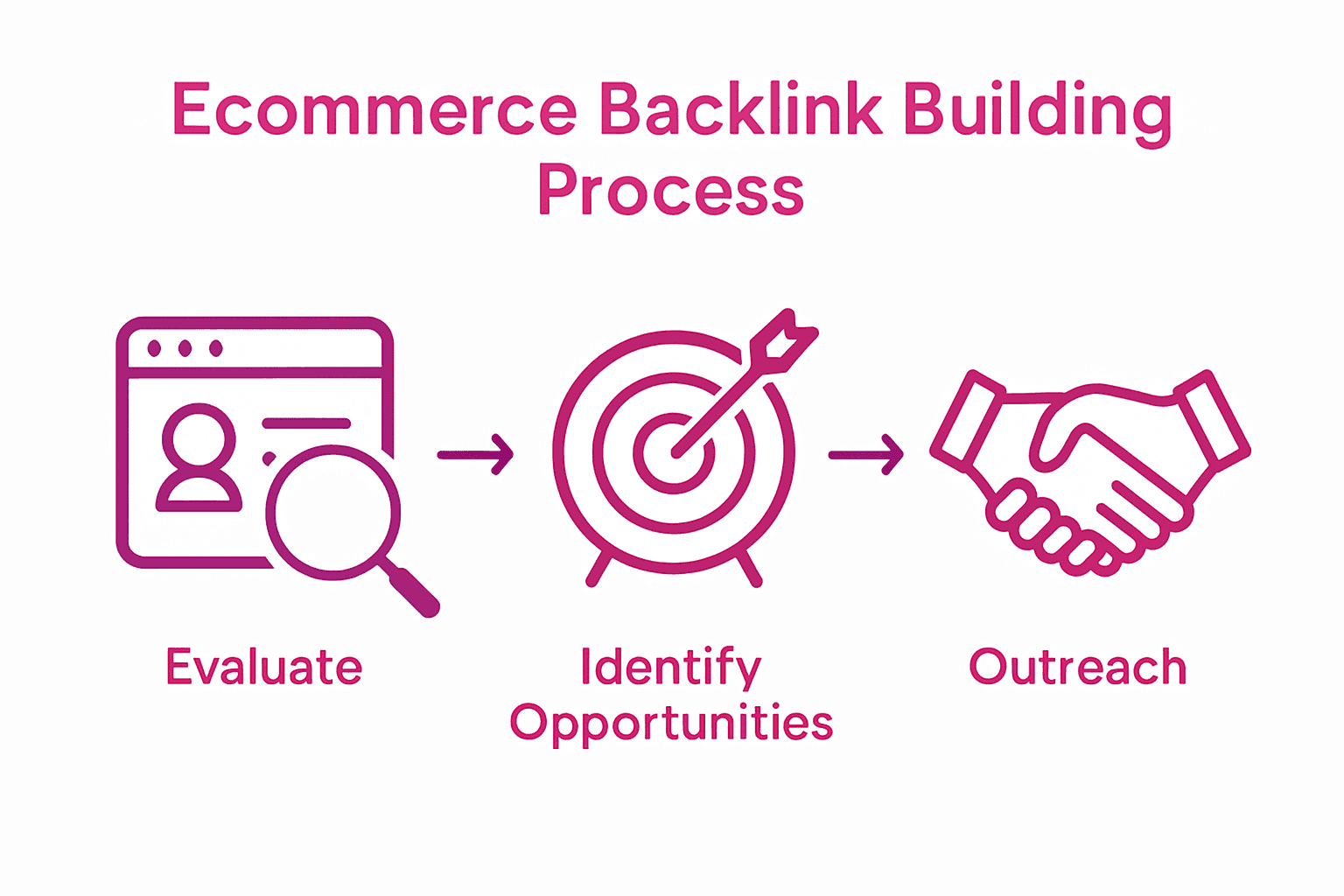
Step 1: Evaluate Your Site’s Backlink Profile
In this crucial step, you will conduct a comprehensive analysis of your website’s existing backlink landscape. Understanding your current backlink profile helps you identify strengths, weaknesses, and strategic opportunities for improvement.
According to research from IRJET, evaluating your backlink profile is fundamental to enhancing search engine rankings for ecommerce websites. Start by using reputable backlink analysis tools like Ahrefs, SEMrush, or Moz to generate a detailed report. These tools will provide insights into metrics such as total backlink count, domain authority of linking sites, anchor text distribution, and link quality.
As you review your backlink profile, pay close attention to several key indicators. Look for links from high authority websites within your industry, assess the diversity of your link sources, and identify potentially toxic or spammy backlinks that could harm your SEO performance. IJFMR emphasizes the critical role of comprehensive backlink evaluation in improving website authority.
Warning: Not all backlinks are created equal. Prioritise quality over quantity and be prepared to disavow low quality or potentially harmful links through Google Search Console.
Once you have completed this evaluation, you will be ready to move into strategic backlink acquisition and refinement.
Step 2: Identify High-Value Link Opportunities
In this step, you will learn how to strategically discover and target link opportunities that can significantly boost your ecommerce website’s search engine authority and online visibility.
Research from arXiv highlights sophisticated approaches to identifying valuable link connections. Begin by mapping out potential link sources within your industry ecosystem. This includes industry blogs, relevant publications, complementary business websites, and authoritative platforms that align with your ecommerce niche.
According to a utility-based link recommendation study from arXiv, not all potential links offer equal value. Focus on websites that demonstrate high domain authority, relevant content alignment, and genuine audience overlap with your target market. Some strategic approaches include guest posting opportunities, collaborative content projects, expert interviews, product reviews from industry influencers, and participation in professional forums or discussion platforms.
Pro tip: Use advanced search operators like “intitle:write for us” or “inurl:guest post” combined with your industry keywords to discover link building prospects more efficiently.
After identifying these high potential link opportunities, you will be prepared to initiate targeted outreach and relationship building strategies.

Step 3: Create Link-Worthy Ecommerce Content
In this critical step, you will learn how to develop compelling content that naturally attracts high quality backlinks and positions your ecommerce website as an authoritative resource in your industry.
Research from arXiv highlights the importance of creating content that fosters link formation through strategic social network analysis. Focus on generating in depth resources that provide genuine value to your target audience. This might include comprehensive buying guides, industry trend reports, expert interviews, original research studies, or interactive content that solves specific customer problems.
According to network link prediction research from arXiv, developing content that closes network information gaps can significantly improve your link acquisition potential. Consider creating content that offers unique insights, addresses common pain points, or presents data visualisations that are not readily available elsewhere. Your goal is to become a go to resource that other websites naturally want to reference and link to.
Pro tip: Always prioritise depth and originality over generic content. Conduct thorough research, include original data points, and present information in a visually engaging and easily digestible format.
For more strategic insights on developing powerful content, check out our Complete Guide to SEO for E-Commerce that explores advanced content marketing techniques.
Once you have created your link worthy content, you will be prepared to implement strategic outreach and promotion strategies.
Step 4: Outreach to Relevant Industry Sites
In this pivotal step, you will learn how to strategically connect with industry websites and convert potential link opportunities into meaningful partnerships that enhance your ecommerce site’s online authority.
Research from ISSI Society reveals critical insights into web impact factors and effective backlink acquisition strategies. Begin by crafting personalised outreach emails that demonstrate genuine value. Your communication should highlight how your content or collaboration can benefit their audience specifically.
According to the Market Opportunity Navigator, identifying and selecting the most promising opportunities is crucial. Prioritise websites with strong domain authority, audience alignment, and a history of featuring guest content or collaborative projects. Your outreach should be tailored to each site target its unique content needs and audience interests.
Pro tip: Always lead with how you can provide value. Avoid generic template emails and instead show that you have genuinely researched their website and understand their content ecosystem.
For deeper insights into developing powerful industry relationships, explore our Complete Guide to SEO for E-Commerce that explores advanced networking techniques.
Once you have initiated meaningful conversations, you will be prepared to negotiate and secure high quality backlinks for your ecommerce website.
Step 5: Monitor Backlink Results and Refine Strategy
In this crucial final step, you will learn how to systematically track and analyse your backlink performance to continuously improve your ecommerce website’s search engine visibility and link building effectiveness.
Research from MSUniv highlights the importance of using sophisticated monitoring tools like Google Search Console and Moz for comprehensive backlink profile analysis. Schedule monthly reviews to assess key metrics such as domain authority, referral traffic, link diversity, and overall link quality. Look for patterns in your most successful backlinks and identify opportunities to replicate those link acquisition strategies.
According to IJFMR, continuous backlink analysis is essential for maintaining optimal search engine performance. Pay special attention to newly acquired links, tracking their impact on your website’s search rankings and organic traffic. Remove or disavow low quality or potentially harmful links that could negatively impact your site’s authority.
Pro tip: Create a spreadsheet to track your backlink acquisition progress, documenting the source, date acquired, and performance metrics for each link to help you refine your strategy over time.
For a comprehensive understanding of SEO monitoring techniques, explore our SEO Basics guide that offers in depth insights into performance tracking.
With these monitoring strategies in place, you will have a dynamic approach to building and maintaining a robust backlink profile for your ecommerce website.
Unlock the Full Potential of Your Ecommerce Backlink Strategy
Building a strong backlink profile is essential yet challenging. If you have struggled with analysing your backlinks, identifying high-value link opportunities, or creating truly link-worthy ecommerce content, you are not alone. The key pain points include recognising toxic links, finding genuine industry partnerships, and effectively monitoring your backlink performance to drive real organic growth. Our deep expertise in SEO, AI, Social Media and PPC, backed by over 25 years of scaling successful ecommerce brands, positions us perfectly to help you overcome these hurdles.
Take control of your backlink journey with personalised strategies that focus on quality over quantity and deliver measurable results. We invite you to explore our holistic digital marketing solutions designed specifically for ecommerce businesses at iwanttobeseen.online. Learn actionable tactics and advanced techniques outlined in our Complete Guide to SEO for E-Commerce and track your progress with confidence using insights from our SEO Basics guide.

Don’t let inconsistent backlinks hold your ecommerce brand back. Act now to transform your SEO performance with our expert support at iwanttobeseen.online. Start building a powerful backlink profile today by connecting with us for bespoke digital marketing solutions.
Frequently Asked Questions
How do I evaluate my ecommerce site’s backlink profile?
To evaluate your ecommerce site’s backlink profile, use backlink analysis tools to generate a detailed report. Look for key metrics such as total backlink count, domain authority, and link quality to identify strengths and weaknesses.
What are high-value link opportunities I should target for my ecommerce site?
Focus on high-value link opportunities like authoritative industry blogs, relevant publications, and websites with audience overlap. Utilize search operators to efficiently discover guest post opportunities within your niche.
How can I create link-worthy content for my ecommerce site?
Create link-worthy content by developing in-depth resources that provide real value, such as buying guides or original research. Aim for originality and data-driven insights that can help establish your site as a go-to resource in your niche.
What is the best way to outreach for backlinks?
Start outreach by crafting personalized emails that highlight the value your content brings to the recipient’s audience. Make sure each message is tailored, demonstrating genuine interest and understanding of their website’s content needs.
How do I monitor my backlink performance effectively?
Monitor your backlink performance by conducting monthly reviews using tracking tools to measure domain authority, referral traffic, and overall link quality. Track the impact of newly acquired links to continually refine your link building strategy.
When should I disavow low-quality backlinks from my ecommerce site?
Disavow low-quality backlinks once you identify them as harmful to your site’s SEO performance. Regularly assess your backlink profile, and if any links appear toxic or irrelevant, take action to protect your site’s authority.
Recommended
Comments