.png)
What is influencer collaboration? Guide for e-commerce


Most e-commerce brands treat influencer collaboration as a glorified paid post. Brief, transactional, forgotten within a week. Yet the brands consistently winning on social media in the UK and Ireland are doing something fundamentally different. They are building genuine partnerships with creators who actually believe in what they sell. This guide cuts through the confusion around what influencer collaboration really means, explains why it differs from standard influencer marketing, and gives you practical steps to build partnerships that generate real visibility, trust, and long-term engagement for your e-commerce brand.
Table of Contents
Key Takeaways
Point | Details |
Collaboration vs marketing | Influencer collaboration is about building lasting relationships, not just advertising reach. |
Micro-influencers excel | Partnerships with micro-influencers often drive deeper engagement and trust for e-commerce brands. |
Authenticity is key | Authentic collaborations create sustainable brand visibility and customer loyalty. |
Long-term value | Ongoing influencer partnerships outperform short-term campaigns in creating brand trust. |
Defining influencer collaboration in e-commerce
Influencer collaboration is not simply paying someone with a large following to post about your product. That is influencer advertising. True collaboration is a working relationship where both the brand and the creator contribute ideas, shape content, and share a mutual goal of delivering value to an audience.
Think of it this way. Influencer advertising is a billboard. Influencer collaboration is a recommendation from a trusted friend. One interrupts, the other informs.
The distinction matters enormously for influencer marketing for e-commerce brands because audiences have become exceptionally good at spotting inauthenticity. A creator who genuinely uses and believes in your product communicates that through every piece of content they produce. A creator who received a one-off payment and a brief? That shows too.
Here is what genuine influencer collaboration looks like in practice:
Co-created content where the influencer shapes the narrative, not just delivers a script
Ongoing relationships spanning multiple campaigns or product launches
Shared values alignment between the brand and the creator’s established audience
Two-way communication where feedback from the influencer informs product or marketing decisions
Transparent, authentic endorsement rather than forced promotional language
The influencer advertising perspectives debate has evolved significantly over the past decade. What once worked through novelty now requires substance.
“Contrasting transactional ‘smash-and-grab’ approaches with genuine collaboration builds more trust with audiences over time.”
For UK and Irish e-commerce businesses, this is particularly relevant. British and Irish consumers are sceptical by nature. They respond to honesty and are quick to dismiss anything that feels like a hard sell. Maintaining brand consistency in e-commerce through influencer partnerships reinforces that honesty at scale.
Long-term collaboration also creates compounding value. Each piece of content an influencer produces adds to a growing body of authentic endorsement that continues to influence purchasing decisions long after the original post date.
Types of influencer collaborations and their outcomes
Understanding the concept is essential, but knowing which approaches work best for your brand comes next. Not all collaborations are equal, and choosing the wrong format can waste both budget and goodwill.
Transactional vs relational collaborations
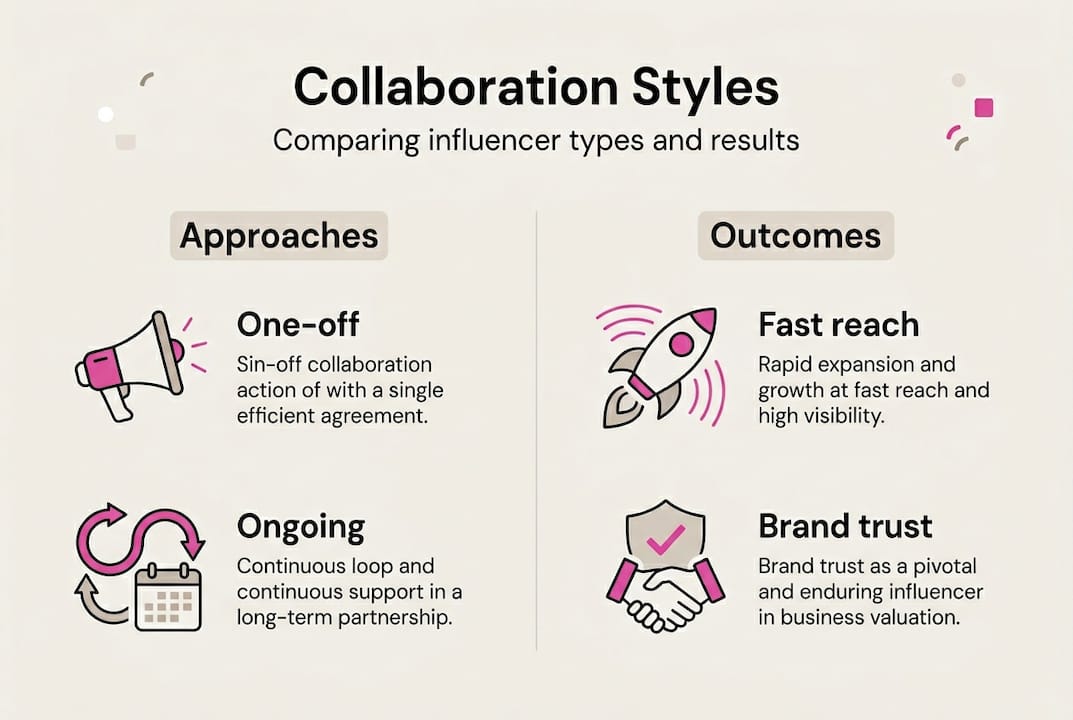
Transactional collaborations are one-off arrangements. A brand pays for a post, the content goes live, the relationship ends. Relational collaborations are ongoing. The influencer becomes a genuine advocate, appearing across multiple touchpoints over months or years.

Influencer tiers and their impact
Influencer type | Follower range | Typical engagement rate | Best for |
Nano | 1K to 10K | 5 to 8% | Hyper-local, niche audiences |
Micro | 10K to 100K | 3 to 6% | Targeted communities, trust-building |
Macro | 100K to 1M | 1 to 3% | Broad awareness campaigns |
Mega/Celebrity | 1M+ | 0.5 to 1.5% | Mass reach, brand launches |
Micro-communities drive more meaningful engagement than mega influencers in most e-commerce contexts. A beauty brand targeting Irish women aged 25 to 40 will almost always see better return from a trusted micro-influencer in Dublin than from a celebrity with millions of global followers.
The key outcomes by collaboration type:
Reach-focused (advertising): High visibility, lower engagement, weaker brand trust
Trust-focused (marketing): Moderate reach, higher engagement, stronger purchase intent
Long-term relational: Compounding visibility, strongest trust, highest lifetime value
Pro Tip: Before committing to any influencer, review at least 90 days of their content. Look for consistent tone, genuine audience interaction, and whether their community asks questions or simply scrolls past. Engagement quality matters far more than follower count.
You can explore real-world influencer outreach case studies to see how UK e-commerce brands have navigated these decisions. The evidence consistently points toward relational, value-driven partnerships as the highest-performing approach. The role of social proof in e-commerce cannot be overstated here. An influencer who genuinely vouches for your brand creates the kind of third-party validation that no paid advertisement can replicate.
How influencer collaborations drive brand visibility and engagement
With styles of collaboration mapped, it’s time to see how these drive the results that matter most for online brands. Visibility and engagement are the two metrics most e-commerce managers track, but collaboration affects them in ways that solo marketing simply cannot match.
Key metrics influenced by collaboration
Metric | Solo brand marketing | Influencer collaboration |
Organic reach | Limited to existing audience | Extended to new, relevant audiences |
Engagement rate | Typically 0.5 to 2% | Often 3 to 8% via micro-influencers |
Purchase intent | Moderate | Significantly higher with trusted creators |
Content longevity | Short shelf life | Evergreen through creator’s catalogue |
Advertising-focused influencer partnerships expand reach but may lack the trust and engagement of marketing-led collaborations. This is the critical trade-off every e-commerce brand must understand before allocating budget.
For UK and Irish brands, the practical steps to drive visibility through collaboration are:
Define your audience first. Know exactly who you want to reach before identifying any influencer. Age, location, interests, and purchase behaviour all matter.
Match influencer audience to your customer profile. Use platform analytics or third-party tools to verify that an influencer’s followers match your target customer.
Brief for authenticity, not perfection. Give influencers creative freedom within brand guidelines. Scripted content performs poorly.
Measure engagement, not just impressions. Comments, saves, and shares indicate real impact. Impressions alone tell you very little.
Repurpose collaboration content. Strong influencer content can be used across your own channels, extending its reach and reinforcing content marketing innovations within your broader strategy.
A well-executed collaboration also strengthens brand reputation in e-commerce over time. When multiple trusted voices consistently endorse your brand, it creates a cumulative credibility that advertising spend alone cannot buy.
Building authentic, effective influencer partnerships
Effective collaborations don’t happen by chance. Here’s how to build relationships that last and deliver results.
Finding the right influencers
Start with your existing customers. Some of your most authentic potential collaborators are already buying from you. Search hashtags relevant to your product category on Instagram and TikTok. Look for creators who post about your niche without being paid to do so. That organic interest is the foundation of a genuine partnership.
Key criteria when evaluating influencers:
Audience authenticity: Check for fake followers using tools like HypeAuditor or Modash
Content quality: Does their content reflect the standard your brand maintains?
Values alignment: Would their audience naturally be interested in your product?
Engagement patterns: Are followers genuinely interacting, or is it passive scrolling?
Previous brand relationships: Have they worked with competitors or conflicting brands?
Approaching with value
Do not lead with a payment offer. Lead with a genuine reason why the collaboration makes sense for their audience. Influencers receive dozens of outreach messages daily. The ones that stand out explain the mutual benefit clearly and demonstrate that you have actually engaged with their content.
Long-term relationships foster deeper trust and brand value that short-term campaigns simply cannot replicate. This is not a soft claim. It is a measurable business outcome.
Pro Tip: Start small. Offer a trial collaboration before committing to a long-term contract. This protects both parties and gives you genuine performance data to work with.
Sustaining the relationship
Treat influencers like partners, not vendors. Share product updates before they go public. Invite feedback on new launches. Acknowledge their contribution publicly. These small gestures build the kind of loyalty that translates into consistent, enthusiastic advocacy. This approach mirrors the principles behind building customer loyalty and applies equally well to creator relationships. Investing in brand lift marketing through sustained influencer partnerships creates measurable, compounding returns.
Our take: Stop treating influencers as short-term assets
Having explored actionable steps, let’s reflect on the deeper lessons for e-commerce marketing leaders. After more than 25 years scaling e-commerce brands, we have seen the same mistake repeated constantly. Brands chase reach, sign a celebrity influencer for a single campaign, see a spike in traffic, and then wonder why it didn’t convert.
The uncomfortable truth is that short-termism in influencer strategy is expensive. Not just in budget, but in brand equity. Every transactional campaign that feels forced erodes a little of the trust your brand has built. Audiences remember.
Relationship-driven influencer collaborations outperform transactional campaigns in building ongoing engagement. We have seen this consistently across the brands we have worked with. The brands that invest in three or four genuine, long-term creator relationships consistently outperform those spending the same budget on ten one-off posts. Before you commit another pound to influencer spend, it is worth evaluating ad spend against the relational alternatives.
Explore more ways to boost your brand visibility
If you’re ready to take influencer collaboration to the next level, here’s where to start. Building a genuine influencer strategy takes time, the right tools, and a clear understanding of your brand’s goals. That is exactly what we help e-commerce businesses across the UK and Ireland achieve.

At I Want To Be Seen, our e-commerce growth solutions are built on over 25 years of hands-on experience scaling real brands. From identifying the right influencer profiles to integrating collaboration into your wider SEO and social media strategy, we offer practical, results-focused support. If you want to move beyond one-off posts and build partnerships that actually grow your brand, get in touch with our team today.
Frequently asked questions
What is the main difference between influencer collaboration and influencer marketing?
Influencer collaboration focuses on building genuine, ongoing relationships, while influencer marketing often prioritises short-term brand exposure through transactional arrangements. Collaboration creates compounding trust; marketing alone creates momentary visibility.
How can e-commerce businesses in the UK and Ireland benefit from influencer collaborations?
E-commerce brands can increase trust, engagement, and brand visibility by forming authentic partnerships with influencers whose audiences match their target customers. Micro-communities drive meaningful engagement that translates directly into purchase intent.
Are micro-influencer collaborations more effective than partnerships with celebrity influencers?
Micro-influencers often deliver higher engagement and greater trust despite smaller reach, making them especially impactful for niche e-commerce brands. Micro-communities over mega-reach consistently enhances trust-building in targeted markets.
What pitfalls should e-commerce brands avoid in influencer collaboration?
Avoid transactional, one-off campaigns and inauthentic partnerships as these deliver weak engagement and little lasting brand impact. Relationship-driven collaborations outperform transactional campaigns across every meaningful metric.
Recommended
Comments