.png)
What Is PPC? 30% Boost in UK Ecommerce Sales in 2026
- Darren Burns
- Mar 2
- 9 min read


Many UK ecommerce business owners believe PPC advertising is straightforward. The reality is stark: 70% of PPC campaigns underperform due to lack of continuous optimization and misaligned targeting. Effective PPC demands ongoing strategy and refinement to drive meaningful sales growth. This guide reveals PPC fundamentals, evolving 2026 trends, AI integration, platform choices, and practical optimization steps tailored for UK ecommerce growth.
Table of Contents
Key Takeaways
Point | Details |
AI drives 30% higher conversions | Performance Max and automated bidding optimize campaigns in real time. |
First-party data enhances targeting | Collecting customer data legally improves ad relevance in privacy-first UK markets. |
Google and Meta offer complementary strengths | Google converts high-intent searches; Meta excels at retargeting and engagement. |
Continuous monitoring prevents waste | Regular optimization stops irrelevant clicks from draining your budget. |
Introduction to PPC Advertising
PPC stands for pay-per-click advertising. You only pay when someone clicks your ad, making it a cost-effective way to target shoppers actively searching for products. PPC is a paid model where advertisers pay per click driving immediate targeted traffic, unlike organic SEO which takes months to gain traction.
For UK ecommerce businesses, PPC delivers instant visibility on search engines and social platforms. It complements organic efforts by capturing ready-to-buy customers while your SEO builds momentum. The measurable nature of PPC provides clear ROI indicators, essential for budget-conscious ecommerce owners.
Key PPC benefits include:
Immediate traffic to new product launches or seasonal campaigns
Precise audience targeting based on demographics, interests, and purchase intent
Complete budget control with adjustable daily spend limits
Real-time performance tracking to measure every pound invested
Understanding these mechanics helps you approach PPC strategically rather than throwing money at ads hoping for results. The complete guide to ecommerce PPC explores these foundations in greater depth.
Why PPC Still Matters for UK eCommerce in 2026
Despite rising competition, PPC remains the fastest channel to reach buyers ready to purchase. PPC converts at 2-4x higher rates than organic channels, making it indispensable for serious ecommerce growth. The average UK ecommerce cost-per-click sits around £0.89, enabling scalable campaigns without breaking the bank.
Why does PPC outperform other channels? Search ads appear exactly when shoppers look for products, capturing high purchase intent. Social ads reach users based on behaviour and interests, creating demand even before they search. This dual approach drives both immediate conversions and long-term brand awareness.
Critical PPC advantages for 2026:
Speed to market beats SEO by months for new stores or products
Granular targeting eliminates wasted impressions on irrelevant audiences
Flexible budgets scale up during peak seasons and scale down during slow periods
Actionable data reveals customer preferences and profitable product lines
UK ecommerce businesses investing in optimized PPC see 2-4x better conversion rates compared to relying solely on organic traffic.
The PPC importance in 2026 UK ecommerce landscape cannot be overstated. Competitors already use sophisticated strategies. Falling behind means losing market share to brands that master paid advertising.
The Role of AI and Automation in Modern PPC
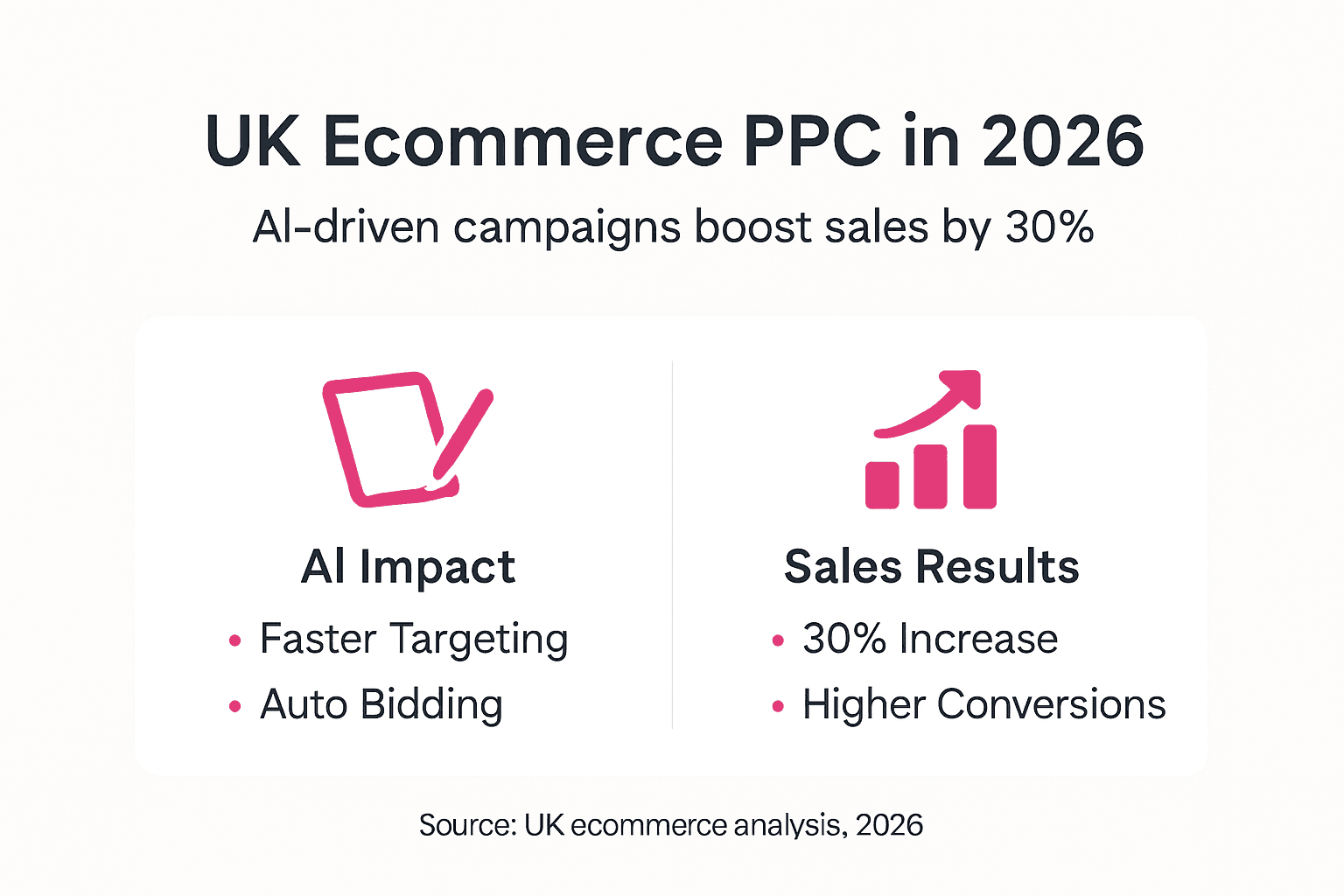
AI transformed PPC from manual bid adjustments to intelligent, self-optimizing campaigns. Machine learning algorithms analyze millions of signals in real time, adjusting bids and placements to maximize conversions. Google Performance Max boosts conversion rates by up to 30% by leveraging AI across search, display, YouTube, and Gmail simultaneously.

Google’s Smart Bidding uses historical data and contextual signals to predict conversion likelihood for each auction. Meta’s Advantage+ campaigns automatically test ad variations, audiences, and placements to find winning combinations. Manual bid management simply cannot match this speed and precision.
Key AI capabilities reshaping PPC:
Real-time bid optimization adjusts for device, location, time of day, and user behaviour
Automated audience creation identifies high-value customer segments from your data
Dynamic creative optimization tests headlines, images, and calls-to-action simultaneously
Predictive analytics forecast campaign performance before spending budget
AI-powered campaigns reduce cost-per-acquisition by 25-40% compared to manual management in competitive UK markets.
Pro Tip: Combine AI automation with human strategy by setting clear campaign objectives and providing quality creative assets. AI optimizes delivery, but your brand positioning and messaging still require human insight.
Understanding AI’s impact on ecommerce marketing helps you leverage these tools effectively rather than treating them as black boxes.
Leveraging First-Party Data for Smarter PPC
Third-party cookies are disappearing, making first-party data your most valuable targeting asset. First-party data includes information customers voluntarily share: email addresses, purchase history, website behaviour, and loyalty program activity. Post-third-party cookie era makes first-party data vital for PPC targeting and personalization.
UK ecommerce merchants must collect this data legally through transparent consent and privacy policies. Once gathered, first-party data powers remarketing campaigns targeting previous visitors, lookalike audiences matching your best customers, and personalized ad content reflecting individual preferences.
Effective first-party data collection methods:
Website tracking pixels capturing browsing patterns and product views
Email signup incentives building permission-based contact lists
Loyalty programs rewarding repeat purchases while gathering preferences
Post-purchase surveys understanding customer motivations and satisfaction
Personalized PPC campaigns using first-party data increase conversion rates by showing relevant products to qualified audiences. Someone who abandoned a cart sees that exact product. Previous buyers receive complementary item suggestions. New visitors matching your customer profile discover your brand through lookalike targeting.
Pro Tip: Start building your first-party data infrastructure now. The first-party data usage guide explains compliant collection methods and advanced targeting strategies that future-proof your PPC approach.
Businesses delaying first-party data integration face significant disadvantages as targeting capabilities diminish industry-wide.
Common Misconceptions About PPC
Misunderstandings about PPC lead to wasted budgets and disappointing results. Correcting these misconceptions transforms campaigns from underperforming liabilities into profitable growth engines. 70% of PPC campaigns underperform due to lack of continuous optimization and misaligned targeting.
The biggest myths sabotaging UK ecommerce PPC:
PPC is set and forget: Successful campaigns require continuous monitoring, A/B testing, and refinement. Market conditions, competitor activity, and customer behaviour constantly shift. Static campaigns decay rapidly.
More clicks equal more sales: Irrelevant clicks from poor targeting drain budgets without generating revenue. Quality beats quantity. Reaching 100 high-intent shoppers outperforms 1,000 casual browsers.
AI replaces human strategy: Automation handles execution brilliantly but cannot define brand positioning, create compelling offers, or understand business context. AI optimizes the strategy you provide.
PPC delivers instant profits: While PPC drives immediate traffic, profitable campaigns require testing, data accumulation, and iterative improvement. Expect 4-8 weeks of optimization before hitting stride.
Higher bids guarantee top positions: Ad relevance, landing page experience, and expected click-through rate determine placement. Poor quality ads waste money regardless of bid amounts.
Recognizing these realities helps you approach PPC with appropriate expectations and commitment. The expert PPC strategy guide provides frameworks for avoiding these common pitfalls.
Choosing the Right PPC Platform(s) for UK eCommerce
Different platforms serve distinct purposes in your ecommerce growth strategy. Google Ads dominates search intent capture, while Meta excels at social engagement and retargeting. Google Ads yields 20-30% higher direct purchase conversions, making it ideal for capturing active shoppers.
Meta Ads (Facebook and Instagram) delivers 40% better engagement on retargeting campaigns, perfect for nurturing consideration and repeat purchases. The visual nature of social platforms showcases products effectively, building desire before purchase intent crystallizes.
Platform | Best For | Average UK CPC | Conversion Strength |
Google Ads | High purchase intent searches | £0.89 | 20-30% higher direct conversions |
Meta Ads | Retargeting and engagement | £0.65 | 40% better engagement rates |
Pinterest Ads | Visual product discovery | £0.45 | Strong for home and lifestyle |
TikTok Ads | Younger demographic reach | £0.58 | Growing ecommerce adoption |
Platform selection factors:
New stores: Prioritize Google Ads to intercept existing search demand for your product category
Established brands: Layer Meta retargeting to re-engage previous visitors and build loyalty
Visual products: Consider Pinterest or Instagram Shopping for categories like fashion, home décor, and crafts
Budget constraints: Start with one platform, master it, then expand rather than spreading thin
Pro Tip: Most successful UK ecommerce businesses run multi-platform strategies, leveraging Google for acquisition and Meta for retention. The PPC platforms comparison details specific platform capabilities and ideal use cases.
Match platforms to your customer journey stages rather than choosing based solely on cost.
Practical Steps to Optimize Your PPC Campaigns
Execution separates successful campaigns from wasted spending. Following systematic optimization processes ensures continuous improvement and maximum ROI. Continuous optimizations and AI alerts prevent budget waste and improve campaign effectiveness.
Implement these steps for effective PPC management:
Define clear objectives: Set specific goals like £5,000 monthly revenue or 50 new customers. Vague aims produce vague results.
Install tracking infrastructure: Implement conversion pixels, Google Analytics 4, and enhanced ecommerce tracking before launching campaigns. You cannot optimize what you cannot measure.
Select appropriate platforms: Match platforms to your audience demographics and purchase journey stage based on the previous section’s guidance.
Structure campaigns logically: Organize ad groups by product category, enabling granular performance analysis and budget allocation.
Leverage AI bidding strategies: Use Target ROAS or Maximize Conversions bidding to automate optimization once sufficient conversion data accumulates.
Monitor performance weekly: Review metrics like conversion rate, cost-per-acquisition, and return on ad spend to identify trends early.
Test systematically: Run A/B tests on ad copy, landing pages, and audience segments, changing one variable at a time for clear insights.
Refine based on data: Pause underperforming keywords, increase bids on profitable products, and reallocate budget to winning campaigns.
Pro Tip: Configure automated alerts notifying you when campaigns exceed target cost-per-acquisition or conversion rates drop below thresholds. Early detection prevents budget waste. The PPC campaign optimization best practices and Facebook Ads setup guide provide platform-specific tactics.
Consider website optimization tips to ensure landing pages convert the traffic PPC delivers. Brilliant ads cannot overcome poor user experience.
Conclusion and Next Steps for UK eCommerce Business Owners
PPC remains the most powerful, measurable channel for UK ecommerce growth in 2026. Embracing AI automation and first-party data strategies maximizes efficiency and conversion rates while respecting customer privacy. Success requires continuous learning, testing, and adaptation as platforms evolve and markets shift. Take action now by auditing current campaigns, implementing tracking improvements, and exploring AI-powered optimization tools. Your competitors are already leveraging these advantages.
Explore Our PPC & Ecommerce Marketing Solutions
Transforming PPC knowledge into profitable campaigns requires expertise and ongoing optimization. We provide professional PPC management tailored specifically for UK ecommerce businesses, integrating AI-powered tools to maximize ROI and conversion rates. Our data-driven strategies leverage first-party data for precise targeting while continuously optimizing campaigns to eliminate wasted spend and accelerate revenue growth.

Discover how our PPC growth services combine 25 years of ecommerce experience with cutting-edge technology. Explore proven ecommerce marketing best practices and review our top PPC tools comparison to understand the platforms driving results for successful online retailers.
Frequently Asked Questions About PPC for UK Ecommerce
What is PPC and why should UK ecommerce stores use it?
PPC is pay-per-click advertising where you only pay when users click your ads, directing targeted shoppers to your store immediately. It accelerates sales growth faster than organic methods alone by capturing high-intent buyers actively searching for products.
How does AI improve PPC campaigns for ecommerce?
AI automates bid management and audience targeting, improving conversion rates while saving countless hours of manual optimization. Platforms like Google Performance Max use machine learning to test variations and allocate budget across channels, boosting campaign performance by up to 30%.
What role does first-party data play in PPC targeting?
First-party data enables you to target ads to actual customers legally after third-party cookies disappear from the advertising ecosystem. This customer information improves ad relevance, increases conversion rates, and builds sustainable competitive advantages through owned audience insights.
Which PPC platform is best for UK ecommerce businesses?
Google Ads drives 20-30% higher direct purchase conversions by capturing search intent, while Meta Ads excels at retargeting with 40% better engagement rates. Your business goals, product type, and customer journey stage determine the optimal platform mix rather than a single universal answer.
How much should I budget for PPC in UK ecommerce?
Average UK ecommerce cost-per-click is approximately £0.89, though budgets vary significantly based on competition, goals, and product margins. Start with modest daily budgets like £20-50, gather performance data, then scale spending on campaigns demonstrating positive ROI through continuous optimization.
Recommended
Comments