.png)
What Is Remarketing? Boosting Repeat Conversions Online


Losing a sale after a customer shows genuine interest is a frustration every eCommerce owner knows well. The challenge is not just about attracting new visitors, but about using remarketing to turn those missed opportunities into actual conversions. By reconnecting with buyers across Google, Facebook, email, and more, British and Irish brands can enhance retention and guide customers back to their baskets, making every interaction count.
Table of Contents
Key Takeaways
Point | Details |
Remarketing Advantages | Remarketing enhances conversion rates by re-engaging potential customers, strengthens brand visibility, and allows for personalised marketing efforts. |
Types of Campaigns | Different remarketing strategies, such as dynamic and standard remarketing, address unique business goals and audience segments. |
Data Privacy Compliance | Compliance with data protection laws like GDPR and CCPA is essential for maintaining user trust and avoiding legal issues. |
Maximising ROI | Careful audience segmentation and continuous performance evaluation are crucial for optimising marketing spend and improving campaign effectiveness. |
What Remarketing Means For eCommerce Brands
Remarketing represents a powerful digital strategy that enables online retailers to re-engage potential customers who previously interacted with their brand but did not complete a purchase. At its core, this approach allows eCommerce businesses to strategically reconnect with interested visitors across multiple digital platforms.
The fundamental mechanism of remarketing involves tracking website visitors and presenting them with targeted advertisements that remind them of products they previously viewed. This technique goes beyond traditional advertising by focusing on individuals who have already demonstrated some level of interest in a brand’s offerings. These targeted ads can appear across various digital channels, including social media platforms, display networks, and email marketing campaigns.
For eCommerce brands, remarketing offers several critical advantages:
Increased conversion potential by re-engaging lukewarm leads
Enhanced brand recognition through repeated exposure
More cost-effective advertising compared to broad-reach marketing strategies
Ability to personalise marketing messages based on previous user interactions
Improved customer retention by maintaining continuous engagement
Successful remarketing strategies require sophisticated tracking technologies and intelligent audience segmentation. Brands must carefully balance frequency and relevance to ensure their ads feel helpful rather than invasive. Precise targeting becomes crucial in creating a positive customer experience that encourages potential buyers to return and complete their purchase.
Pro tip: Develop a sophisticated remarketing strategy by creating distinct audience segments based on specific website interaction levels and personalising ad content accordingly.
Types Of Remarketing Campaigns Explained
Remarketing campaigns represent a sophisticated approach to digital advertising, with multiple strategic variations designed to re-engage potential customers. Digital marketing professionals utilise several distinct remarketing techniques to maximise conversion opportunities across different audience segments.
The primary types of remarketing campaigns include:
Standard Remarketing: Displaying ads to previous website visitors across display networks
Dynamic Remarketing: Personalising advertisements based on specific user behaviour and product interactions
Email Remarketing: Targeting existing customers through tailored email campaigns
Video Remarketing: Re-engaging users who have interacted with video content
Social Media Remarketing: Presenting targeted ads on social platforms to previous website visitors
Each remarketing approach offers unique advantages for eCommerce brands. Standard remarketing works best for maintaining general brand visibility, while dynamic remarketing provides hyper-personalised experiences by showcasing exact products users previously viewed. This granular approach allows businesses to create more relevant, compelling advertisements that speak directly to individual customer interests.
Here’s how different types of remarketing campaigns address unique business objectives for eCommerce brands:
Campaign Type | Primary Objective | Personalisation Level | Notable Channel |
Standard Remarketing | Brand recall and visibility | Low | Display networks |
Dynamic Remarketing | Product-focused conversions | High | Google Shopping Ads |
Email Remarketing | Win back previous browsers | Moderate | Direct email |
Video Remarketing | Reinforce interest visually | Moderate | YouTube or similar |
Social Remarketing | Engage via social interaction | Moderate | Facebook, Instagram |
Successful implementation requires sophisticated tracking technologies and intelligent audience segmentation. Brands must balance frequency and relevance, ensuring advertisements feel helpful rather than intrusive. Sophisticated remarketing strategies involve creating multiple audience segments based on interaction levels, purchase history, and browsing behaviour.
Pro tip: Develop a multi-channel remarketing strategy that combines different campaign types to maximise audience engagement and conversion potential.
How Remarketing Campaigns Actually Work
Remarketing campaigns leverage sophisticated tracking technologies to create targeted advertising experiences. Digital advertising platforms collect and analyse first-party user data to reconnect brands with potential customers who have previously shown interest in their products or services.
The technical process of remarketing involves several critical steps:
Data Collection: Gathering user interaction data from websites, email engagements, and social media
Audience Segmentation: Categorising users based on specific behavioural patterns and interaction levels
Profile Matching: Connecting user data with advertising platform user profiles
Ad Targeting: Displaying personalised advertisements across multiple digital channels
Conversion Tracking: Monitoring user responses and campaign performance
Technically, remarketing operates through pixel tracking and cookie-based technologies. When a user visits a website, a small piece of code (tracking pixel) is placed in their browser, creating a list of potential customers. These lists are then uploaded to advertising platforms like Google Ads or Facebook, which match the data with user profiles and display targeted advertisements.

The effectiveness of remarketing relies on precise audience targeting and understanding user behaviour. By creating granular audience segments, businesses can craft highly personalised advertising experiences that speak directly to individual customer interests and purchasing intentions.
Pro tip: Regularly refresh your audience segments and tracking parameters to maintain high relevance and prevent ad fatigue among potential customers.
Data Privacy, Consent, And Legal Compliance
Remarketing campaigns must navigate a complex landscape of legal requirements to protect user privacy and maintain ethical data practices. Digital marketing regulations demand rigorous compliance with stringent data protection laws that safeguard consumer rights and personal information.
Key legal considerations for remarketing campaigns include:
Informed Consent: Obtaining clear, unambiguous permission from users
Data Transparency: Explaining exactly how user data will be collected and used
Right to Opt-Out: Providing simple mechanisms for users to withdraw consent
Data Minimisation: Collecting only necessary information for specific purposes
Secure Data Storage: Implementing robust protection mechanisms for user information
The most critical legal frameworks affecting remarketing include the General Data Protection Regulation (GDPR) in the European Union and the California Consumer Privacy Act (CCPA) in the United States. These regulations require businesses to implement comprehensive consent mechanisms, ensuring users understand and approve how their data will be utilised for targeted advertising purposes.
Effective legal compliance demands a proactive approach. Businesses must design remarketing strategies that prioritise user privacy, provide clear communication about data usage, and maintain transparent opt-out processes. This involves developing comprehensive privacy policies, implementing robust consent management systems, and regularly auditing data collection and usage practices.
This table summarises key compliance aspects eCommerce brands should monitor in remarketing activities:
Compliance Area | Why It Matters | Common Pitfall |
User Consent | Avoids legal action | Ambiguous or hidden consent forms |
Data Security | Protects brand reputation | Weak encryption practices |
Transparency | Builds trust with customers | Vague privacy policy statements |
Opt-Out Mechanisms | Respects user preferences | Difficult-to-find opt-out options |
Pro tip: Consult with a legal professional specialising in digital privacy to ensure your remarketing strategies fully comply with current data protection regulations.
Maximising ROI And Avoiding Costly Mistakes
Successful remarketing requires strategic approach and meticulous performance tracking. Advanced analytics play a crucial role in optimising digital marketing campaigns, enabling businesses to maximise return on investment and minimise unnecessary expenditure.
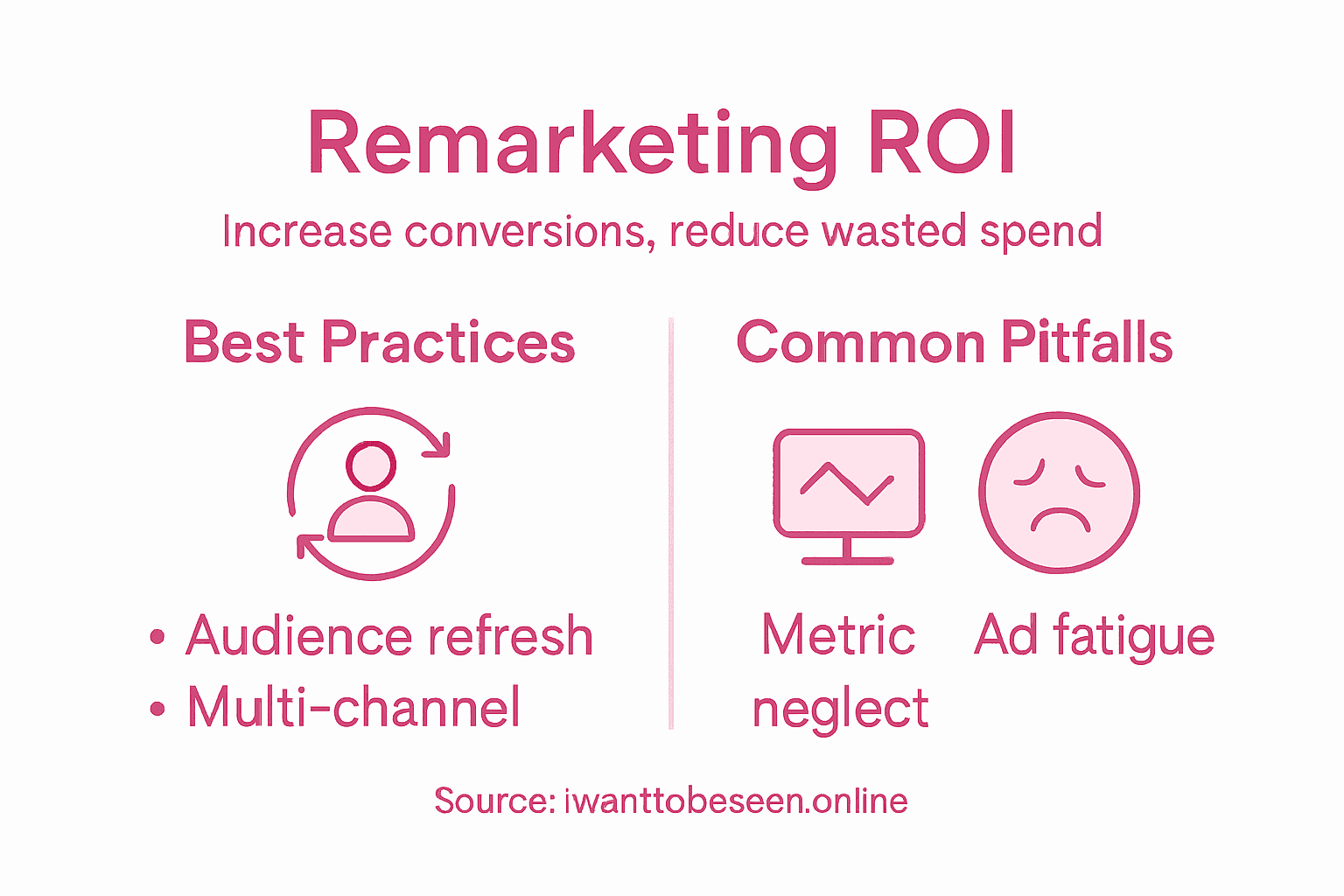
Critical strategies for maximising remarketing ROI include:
Precise Audience Segmentation: Creating targeted groups based on specific user behaviours
Continuous Performance Testing: Implementing A/B testing for ad variations
Budget Allocation: Strategically distributing marketing spend across most effective channels
Frequency Capping: Limiting ad exposure to prevent user fatigue
Personalised Messaging: Crafting tailored content for different audience segments
Common mistakes that can significantly drain marketing budgets involve overlooking key performance metrics and failing to adapt strategies dynamically. Businesses must monitor critical indicators such as conversion rates, customer acquisition costs, and customer lifetime value to ensure their remarketing efforts generate meaningful financial returns.
Technical precision becomes paramount in remarketing campaign management. This involves developing sophisticated tracking mechanisms, implementing advanced analytics tools, and continuously refining targeting parameters to ensure each advertising pound is spent efficiently and effectively.
Pro tip: Implement a monthly review process that critically evaluates campaign performance metrics, allowing for rapid adjustments and continuous improvement of your remarketing strategy.
Unlock the Power of Remarketing to Boost Your eCommerce Success
The article highlights the challenge many eCommerce brands face: how to turn interested visitors into loyal customers through precise audience targeting and personalised campaigns. Remarketing is a proven strategy to increase conversions by re-engaging shoppers who have already shown interest but paused before completing a purchase. Recognising pain points like ad fatigue, legal compliance, and ROI optimisation is key for sustainable growth.
At iwanttobeseen.online, we specialise in digital marketing solutions crafted to solve these exact challenges. With over 25 years of experience scaling top-tier eCommerce brands, our services include SEO, AI-driven strategies, social media, and PPC campaigns tailored for dynamic remarketing success. We help you create segments that convert, craft personalised messaging, and ensure legal compliance with data privacy regulations so your brand consistently wins back customers.
Elevate your digital marketing with a partner who understands the delicate balance of frequency, relevance, and innovation. Learn more about how our digital marketing services can transform your remarketing efforts and drive repeat conversions.
Experience real growth with expert guidance today.

Are you ready to maximise your remarketing ROI and convert browsers into buyers Right now visit iwanttobeseen.online to start scaling your eCommerce brand with proven digital marketing expertise
Frequently Asked Questions
What is remarketing in eCommerce?
Remarketing in eCommerce is a digital strategy that allows online retailers to reconnect with potential customers who have previously interacted with their website but did not complete a purchase. It involves displaying targeted advertisements to remind these visitors about the products they viewed.
How does remarketing improve conversion rates?
Remarketing improves conversion rates by re-engaging users who have already shown interest in a brand’s offerings. By presenting personalised ads that remind users of products they previously viewed, eCommerce brands can attract them back to complete their purchase.
What are the different types of remarketing campaigns?
The primary types of remarketing campaigns include Standard Remarketing, Dynamic Remarketing, Email Remarketing, Video Remarketing, and Social Media Remarketing. Each type offers unique advantages, focusing on different user behaviours and engagement channels to enhance conversion potential.
How can I ensure my remarketing ads are effective?
To ensure remarketing ads are effective, focus on creating precise audience segments based on user behaviour, regularly test and optimise your ads through A/B testing, and personalise your messaging to resonate with different user segments. Limiting ad frequency is also essential to prevent ad fatigue.
Recommended
Comments