.png)
Local SEO Guide for Ecommerce: Boost Local Sales Fast


Nearly half of all british shoppers prefer to buy from local businesses online, yet many ecommerce sites still miss out on this valuable audience. Local SEO has become a make-or-break factor as digital competition grows. Mastering local search ranking means your brand shows up right where your customers are looking. This guide reveals practical steps to strengthen your online presence and turn more local visitors into paying customers.
Table of Contents
Quick Summary
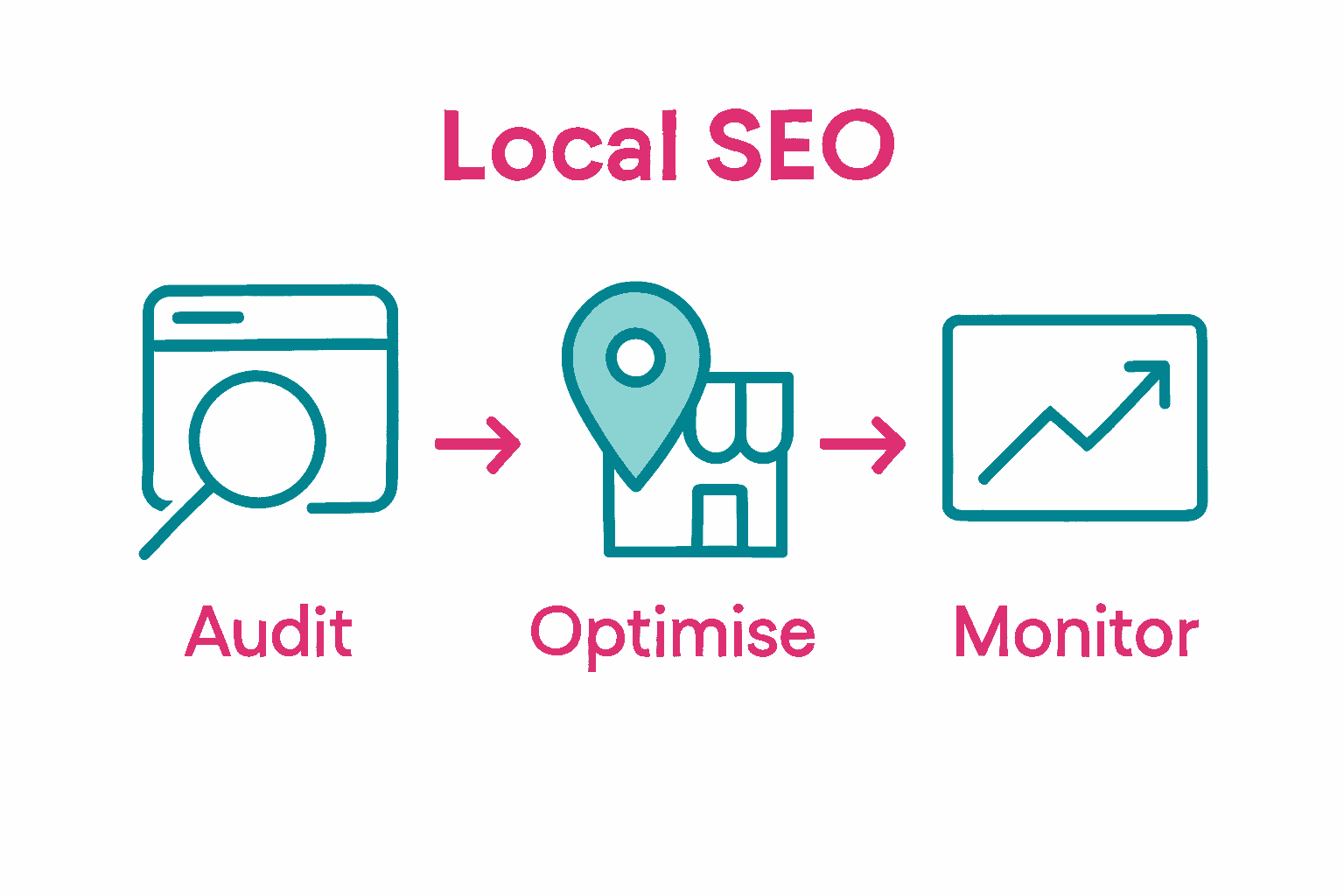
Key Insight | Explanation |
1. Audit Your Digital Presence | Conduct a thorough examination of your Google Business Profile, local keywords, and citation consistency to assess SEO readiness. |
2. Create Unique Location Content | Develop tailored content for each geographic area that includes specific product descriptions and local keywords to boost local visibility. |
3. Optimize Your Google Business Profile | Ensure your profile has accurate and complete information, regularly update it, and use local keywords to enhance engagement. |
4. Build Consistent Local Citations | List your business in relevant directories and maintain consistent NAP information to strengthen your local search ranking. |
5. Monitor and Adjust SEO Performance | Use analytics tools to track local SEO metrics and implement data-driven changes to continually improve your local search visibility. |
Step 1: Assess Local SEO Readiness for Your Ecommerce Site
Assessing your ecommerce site’s local SEO readiness is a strategic first step towards improving your online visibility and attracting local customers. According to research from scirp, geographical area and local society keywords play a crucial role in enhancing website visibility.
To begin your local SEO assessment, start by conducting a comprehensive audit of your current digital presence. This involves examining several key elements: your Google Business Profile completeness, local keyword targeting, location specific content, and citation consistency across online platforms. The research from ajisresearch highlights that web analytics and strategic SEO practices can significantly drive business performance, especially for small and medium enterprises.
Key indicators of local SEO readiness include having consistent NAP (Name, Address, Phone Number) information across all online directories, creating location specific landing pages, and ensuring your website is optimised for local search terms. Pro tip: Use Google Search Console to understand how your site currently performs in local search results and identify potential areas for improvement. This diagnostic approach will set the foundation for a robust local SEO strategy that can help your ecommerce business attract more nearby customers and increase regional sales.
Step 2: Optimise Location Pages and Product Listings
Optimising location pages and product listings is a strategic approach to boosting your local ecommerce visibility and attracting nearby customers. According to Search Engine Land, effective location landing pages can capture both branded and non-branded query traffic by implementing targeted content strategies.
To optimise your location pages, start by creating unique content for each geographical area you serve. This means developing location specific product descriptions, highlighting local relevance, and incorporating regional keywords naturally into your content. Search Engine Land recommends dropping subtle hints about your service area through carefully crafted content to enhance local search relevance.
Key optimisation tactics include embedding local schema markup, adding location specific images with descriptive alt text, and ensuring your Google Business Profile aligns with the information on your website. Pro tip: Include local customer testimonials, area specific shipping information, and regionally relevant product recommendations to increase engagement. For businesses with multiple locations, create dedicated landing pages that speak directly to customers in each specific area. These targeted approaches will help your ecommerce site appear more relevant and accessible to local searchers, ultimately driving more regional traffic and potential sales.

Step 3: Leverage Google Business Profile for Local Discovery
Leveraging your Google Business Profile is a critical strategy for enhancing local discovery and attracting nearby customers to your ecommerce site. According to Mold Stud, a comprehensive and engaging business profile can significantly improve local search visibility and customer engagement.
To maximise your Google Business Profile, start by ensuring all business information is accurate, complete, and consistent. This includes your business name, address, phone number, website URL, operating hours, and a detailed business description that incorporates relevant local keywords. Mold Stud recommends regularly updating your profile with high quality images, responding to customer reviews, and creating periodic posts about new products or special offers to maintain an active and appealing profile.
Pro tip: Verify your business location, add relevant service area details, and include attributes that help customers understand what makes your ecommerce business unique. Upload professional photos of your products, storefront, or team to build trust and provide visual context. By consistently optimising and engaging with your Google Business Profile, you can improve your local search rankings, attract more nearby customers, and ultimately drive more regional sales for your online store.
Step 4: Build Local Citations and Earn Reviews
Building local citations and earning customer reviews are essential strategies for improving your ecommerce site’s local search visibility and credibility. According to Mold Stud, maintaining consistent NAP (Name, Address, Phone Number) information across online directories is crucial for enhancing local SEO performance.
To build effective local citations, start by identifying and listing your business in relevant local directories, industry specific platforms, and popular review sites. Focus on ensuring your business information remains identical across all platforms to avoid confusing search engines and potential customers. Mold Stud emphasizes the importance of actively seeking customer reviews as a means of building trust and improving local search rankings.
Pro tip: Implement a systematic approach to gathering reviews by sending follow up emails after purchases, creating easy review submission processes, and responding professionally to both positive and negative feedback. Consider offering small incentives or making the review process incredibly simple for customers. By consistently building accurate citations and actively managing your online reputation, you can significantly improve your local search visibility, attract more nearby customers, and establish credibility for your ecommerce business.
Step 5: Monitor Performance and Refine Local SEO Efforts
Monitoring and refining your local SEO performance is a critical ongoing process for ecommerce success. According to AJIS Research, leveraging web analytics tools can provide crucial insights into how your local search strategies are performing and where improvements can be made.
To effectively track your local SEO performance, start by setting up comprehensive analytics tools like Google Analytics and Google Search Console. Focus on key metrics such as local search rankings, organic traffic from nearby regions, click through rates, and conversion rates from local searches. Mold Stud recommends conducting regular performance audits to identify trends, strengths, and potential areas for optimization in your local SEO strategy.
Pro tip: Create a monthly tracking dashboard that helps you visualise your local SEO progress. Pay special attention to metrics like local keyword rankings, website traffic from specific geographical areas, and the number of Google Business Profile interactions. By consistently analyzing these performance indicators and making data driven adjustments, you can continuously improve your local search visibility, attract more nearby customers, and ultimately drive higher regional sales for your ecommerce business.
Take Control of Your Local Ecommerce Success Today
Struggling to boost your ecommerce site’s visibility in local searches? This article highlights the crucial steps like optimising Google Business Profiles, building consistent local citations, and refining location-specific pages to attract more nearby customers. These challenges can feel overwhelming without expert guidance and a tailored strategy that makes your business stand out in crowded regional markets.
Unlock your ecommerce potential with proven digital marketing expertise. At iwanttobeseen.online, we combine over 25 years of experience scaling successful brands with advanced SEO, AI, social media, and PPC services designed specifically for ecommerce businesses. Our solutions tackle common pain points such as local keyword targeting, citation management, and review acquisition to help you climb local search rankings faster and convert local traffic into loyal customers.
Ready to elevate your local ecommerce presence? Discover how our specialised services can transform your local SEO strategy and drive real sales growth today.

Don’t wait for customers to find you by chance. Take action now with a customised plan from iwanttobeseen.online and start dominating local search results for your ecommerce business.
Frequently Asked Questions
How can I assess my ecommerce site’s local SEO readiness?
To assess your ecommerce site’s local SEO readiness, conduct a comprehensive audit of your digital presence. Examine elements like your Google Business Profile, local keyword targeting, and the consistency of your name, address, and phone number (NAP) across directories.
What strategies should I use to optimise my location pages and product listings?
Optimise your location pages by creating unique content for each area you serve and incorporating local keywords. Ensure your Google Business Profile matches your website information and include local testimonials to engage customers effectively.
How do I leverage my Google Business Profile to improve local visibility?
Maximise your Google Business Profile by ensuring all information is accurate and regularly updated. Add high-quality images, respond to customer reviews, and include specific service area details to enhance your profile’s effectiveness.
What are the best practices for building local citations and earning reviews?
Start by listing your business in relevant local directories and maintaining identical NAP information across all platforms. Actively seek customer reviews by following up post-purchase and making the review process simple, which can significantly improve your local search rankings.
How can I monitor and refine my local SEO performance?
To monitor your local SEO performance, set up analytics tools and track metrics such as local search rankings and conversion rates. Regularly conduct performance audits to identify trends and make data-driven adjustments to refine your strategies effectively.
Recommended
Comments