.png)
Why Is SEO Important? Complete Guide for eCommerce


Most online shoppers never scroll past the first page of search results. For ecommerce businesses, this makes search engine optimization a powerful tool for driving growth and outpacing competitors. Understanding the core principles of SEO, from keyword strategy to technical site improvements, can transform your online presence and directly impact your bottom line. This guide reveals the practical steps and essential strategies every ecommerce owner needs to improve rankings, attract targeted traffic, and build long-term credibility.
Table of Contents
Key Takeaways
Point | Details |
Understanding SEO | SEO enhances website visibility through organic search methods, focusing on relevance, authority, and user value. |
Types of SEO | On-Page, Off-Page, and Technical SEO are three critical approaches that collectively improve search engine performance. |
Ecommerce Growth | Effective SEO can drive ecommerce growth by attracting targeted traffic and improving conversion rates without the need for paid advertising. |
Avoiding Pitfalls | Common SEO mistakes such as keyword stuffing and low-quality backlinks should be avoided to ensure sustainable visibility and success. |
Defining SEO and Its Core Principles
Search engine optimization (SEO) is the strategic process of enhancing a website’s visibility and performance within search engine results. According to Wikipedia, SEO focuses on improving both the quality and quantity of website traffic through unpaid search methods, targeting organic search results rather than paid advertising channels.
At its core, SEO involves understanding how search engines like Google evaluate and rank web pages. The fundamental principles revolve around demonstrating relevance, authority, and user value. This means creating content that precisely answers user queries, structures information clearly, and provides genuine value to visitors. Keyword optimization, technical website performance, and high-quality content creation emerge as the primary pillars supporting successful SEO strategies.
Research exploring public awareness reveals an interesting insight: while most users recognize SEO’s impact on search rankings, there remains a limited understanding of specific tactical approaches. As highlighted by ArXiv, this knowledge gap presents both a challenge and an opportunity for ecommerce businesses willing to invest time in understanding search engine dynamics.
For ecommerce websites specifically, SEO isn’t just about visibility - it’s about connecting potential customers with precisely what they’re seeking. By implementing strategic optimization techniques, online stores can:
Increase organic traffic without paying for advertisements
Improve website credibility and user trust
Enhance user experience through better website structure
Compete effectively in crowded digital marketplaces
If you want to dive deeper into comprehensive SEO strategies, check out our Complete Guide to SEO for E‑Commerce, which provides an in-depth exploration of advanced optimization techniques.
Types of SEO: On-Page, Off-Page, Technical
Search engine optimization encompasses three distinct yet interconnected approaches that work together to improve a website’s search engine performance. According to Marketing Journal, these three primary types of SEO are critical for comprehensive digital marketing strategies: On-Page, Off-Page, and Technical SEO.
On-Page SEO
On-Page SEO focuses on optimizing individual web pages to improve search rankings and attract relevant traffic. This involves strategic content creation, precise keyword usage, and ensuring each page’s content directly addresses user search intent. Key elements include:
Crafting high-quality, original content
Optimizing title tags and meta descriptions
Using relevant keywords naturally within content
Implementing header tags (H1, H2, H3)
Creating internal linking structures
Off-Page SEO
Off-Page SEO revolves around external factors that influence a website’s authority and credibility. As highlighted by IJMRSET, this approach emphasizes building a strong reputation beyond your website’s immediate content. Primary strategies include:
Generating high-quality backlinks from reputable websites
Developing a robust social media presence
Creating shareable content that attracts natural links
Engaging in online community discussions
Building brand mentions across digital platforms
Technical SEO
Technical SEO ensures that a website meets the technical requirements of modern search engines. This type focuses on improving website infrastructure, performance, and crawlability. Critical technical aspects include:

Improving website loading speed
Ensuring mobile responsiveness
Implementing secure HTTPS protocols
Creating a clear XML sitemap
Optimizing website architecture for easy crawling
For ecommerce businesses looking to dive deeper into understanding these SEO fundamentals, our SEO Basics: Everything You Need to Know guide provides comprehensive insights into developing a robust search engine optimization strategy.
How SEO Drives eCommerce Growth
Search engine optimization is the critical engine that propels ecommerce businesses from obscurity to online success. According to arXiv, effective SEO techniques can dramatically enhance online visibility, attract more potential customers, and ultimately drive substantial business growth by strategically improving search engine rankings.
The conversion pathway begins with visibility. When an ecommerce website ranks higher in search results, it significantly increases the probability of attracting targeted traffic.
VIDEO:video_content] Research from [IJMRSET emphasizes that improved search rankings directly correlate with increased website visits, which subsequently translates into higher sales potential. This isn’t just about being seen - it’s about being seen by the right customers at the right moment.
For ecommerce businesses, SEO acts as a multifaceted growth strategy that extends beyond simple keyword optimization. The most successful online stores understand that SEO involves:
Creating content that directly answers customer questions
Developing a user-friendly website structure
Building credibility through high-quality backlinks
Optimizing product descriptions and metadata
Improving website loading speed and mobile responsiveness
To dive deeper into mobile-specific optimization strategies that can further accelerate your ecommerce growth, explore our comprehensive Mobile SEO guide for eCommerce Owners, which offers advanced insights into mobile search optimization techniques.
Tangible Benefits and ROI of SEO
SEO represents more than just a digital marketing strategy - it’s a critical investment with measurable financial returns for ecommerce businesses. According to arXiv, implementing strategic SEO techniques can lead to substantial improvements in website traffic and search engine rankings, directly translating into enhanced brand visibility and financial performance.
The return on investment from SEO goes far beyond simple traffic numbers. Research from IJMRSET demonstrates that effective SEO strategies can generate significant improvements in customer engagement and overall business revenue. By targeting the right audience through precise keyword optimization and content strategy, ecommerce businesses can achieve:
50-70% lower customer acquisition costs compared to paid advertising
Higher conversion rates from organic search traffic
Increased long-term brand credibility
Sustainable growth without continuous marketing expenditure
Improved customer trust through higher search rankings
Quantifying SEO’s impact requires understanding its multi-dimensional benefits. While immediate monetary returns are important, the compounding effects of SEO include building a robust digital foundation that continues delivering value long after initial implementation. Consistent optimization creates a snowball effect where improved rankings lead to more visibility, which generates more traffic, ultimately driving more sales.
To gain deeper insights into measuring and maximizing your SEO performance, our comprehensive SEO Audit guide provides advanced techniques for tracking and improving your digital marketing strategies.
SEO Risks, Mistakes, and Best Practices
Navigating the complex world of search engine optimization requires a strategic approach that balances innovation with caution. According to Wikipedia, unethical SEO practices like keyword stuffing and cloaking can lead to severe consequences, including potential search engine penalties or complete website bans.
The most common SEO mistakes that ecommerce businesses make typically stem from short-sighted strategies and a lack of understanding about search engine algorithms. These pitfalls include:
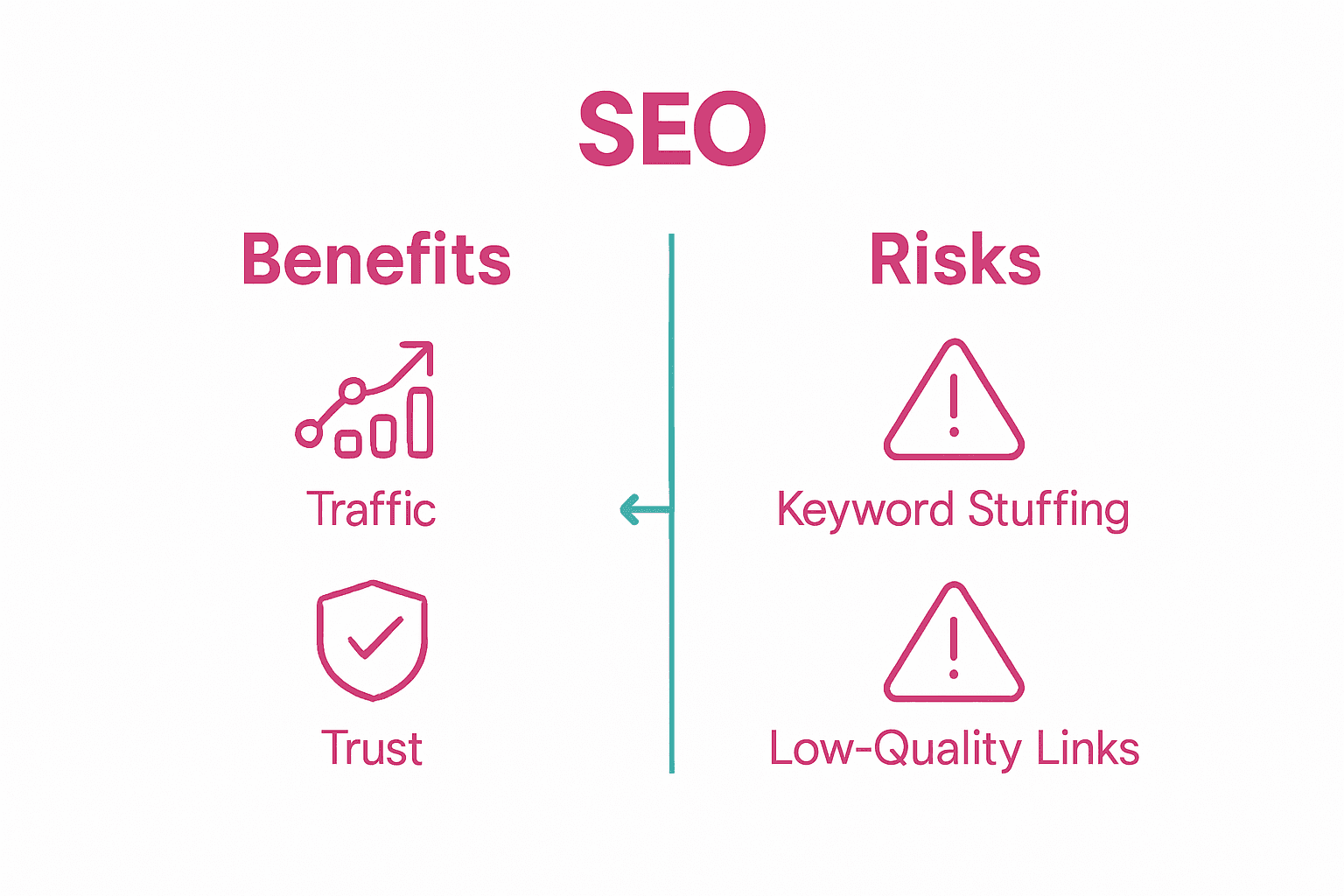
Overusing keywords unnaturally within content
Purchasing low-quality backlinks
Duplicating content across multiple pages
Neglecting mobile website optimization
Ignoring page loading speed performance
Best practices for sustainable SEO demand a holistic approach. Wikipedia’s website audit resource emphasizes the importance of comprehensive analysis to identify and rectify potential visibility issues. Successful ecommerce SEO strategies require continuous monitoring, ethical optimization techniques, and a genuine focus on providing value to users.
For ecommerce entrepreneurs looking to develop a robust backlink strategy that aligns with search engine guidelines, our guide on building backlinks for eCommerce offers step-by-step insights into creating a sustainable and effective link-building approach.
Unlock Your eCommerce Potential with Expert SEO Solutions
The challenge faced by many ecommerce businesses is clear: how to boost your website’s visibility and attract the right customers without wasting budget on costly ads. This article highlights essential concepts like on-page and technical SEO, emphasising the importance of crafting user-friendly content, optimising site performance, and building credible backlinks. If you recognise the frustration of not ranking well despite your efforts or find SEO strategies overwhelming, you are not alone.
Experience how a strategic, ethical SEO approach can transform your online store’s growth trajectory.

Discover personalised digital marketing services at iwanttobeseen.online that combine over 25 years of ecommerce success with cutting-edge SEO expertise. Tackle challenges such as slow site speed, poor mobile responsiveness, and weak keyword targeting with tailored solutions designed for your business goals. Start your journey now with our Complete Guide to SEO for E‑Commerce and gain deeper insights into optimisation. Ready to build lasting online credibility and sustainable growth Begin today by contacting us at iwanttobeseen.online and watch your ecommerce brand thrive.
Frequently Asked Questions
What is SEO and why is it important for eCommerce?
SEO, or search engine optimization, is the process of enhancing a website’s visibility in search engine results. For eCommerce, effective SEO is crucial as it helps attract organic traffic, connects potential customers with products, and improves the site’s credibility and authority.
How can SEO improve my eCommerce website’s performance?
Implementing SEO can enhance your website’s performance by increasing organic traffic, improving search rankings, enhancing user experience, and boosting conversion rates. It helps ensure your site is easily found by users looking for your products.
What are the main types of SEO techniques used in eCommerce?
The main types of SEO techniques include On-Page SEO, which focuses on optimizing content and keywords; Off-Page SEO, which emphasizes gaining backlinks and building brand authority; and Technical SEO, which involves improving website infrastructure for better performance and crawlability.
How can I measure the success of my SEO strategy for my online store?
You can measure the success of your SEO strategy by tracking key performance indicators (KPIs) such as organic search traffic, conversion rates, keyword rankings, and overall revenue growth attributed to organic sources. Regular SEO audits can also help identify improvement areas.
Recommended
Comments