.png)
Ecommerce SEO Explained: Boosting Online Store Visibility


Over 80 percent of online shoppers begin their search with a simple query, yet many british retailers miss out on valuable customers because their stores remain buried in search results. In the competitive world of ecommerce, effective SEO stands between a thriving shopfront and digital obscurity. Whether you are a seasoned retailer or launching your first online store, understanding how ecommerce SEO works can help you connect with new customers and build lasting growth.
Table of Contents
Key Takeaways
Point | Details |
Ecommerce SEO Importance | Optimising an online store enhances search visibility and attracts organic traffic without paid ads. |
Core Strategies | Effective ecommerce SEO involves keyword research, on-page optimisation, technical SEO, content marketing, and link building. |
Best Practices | Key considerations include optimising product titles, ensuring mobile responsiveness, and improving site speed for better user experience. |
Avoid Common Mistakes | Neglecting mobile optimisation, using duplicate content, and inconsistent product details can significantly harm SEO performance. |
Defining Ecommerce SEO For Online Retailers
Ecommerce SEO is the strategic process of optimising an online store’s digital presence to improve search engine visibility and attract organic traffic. According to Coursera, it involves enhancing your digital store’s performance in online search results without relying on paid advertisements, helping your store and product pages appear prominently when potential customers search for products in your niche.
The primary goal of ecommerce SEO is to elevate your online store’s rankings in search engine result pages (SERPs). As Academy Yoast explains, this process encompasses optimising multiple website aspects to improve visibility and deliver a superior user experience. By implementing targeted strategies, online retailers can:
Increase organic website traffic
Improve product page visibility
Enhance user engagement
Reduce dependency on paid advertising
Successful ecommerce SEO requires a comprehensive approach that addresses technical website elements, content optimization, and strategic keyword targeting. This means meticulously refining product descriptions, improving site speed, ensuring mobile responsiveness, and creating high-quality, relevant content that resonates with both search engines and potential customers. For a deeper understanding of implementing these strategies, check out our Complete Guide to SEO for E‑Commerce.
Essential Elements Of Ecommerce SEO Strategies
Keyword optimization forms the foundational core of effective ecommerce SEO strategies. According to Digital Marketing Institute, successful ecommerce SEO encompasses several critical components that work together to improve search engine rankings and drive organic traffic.
The primary elements of a robust ecommerce SEO strategy include:
Keyword Research: Identifying and targeting relevant search terms customers use
On-Page Optimization: Refining individual page elements for maximum search visibility
Technical SEO: Ensuring website infrastructure supports search engine crawling and indexing
Content Marketing: Creating valuable, relevant content that attracts and engages potential customers
Link Building: Developing high-quality external and internal linking strategies
As Graas highlights, critical technical aspects like crafting compelling title tags, optimizing meta descriptions, and incorporating strategic keywords into page URLs can significantly enhance both search engine visibility and user engagement.
Learn more about foundational SEO principles in our SEO Basics Guide, which provides comprehensive insights into developing a winning SEO approach for online retailers.
On-Page And Technical SEO Best Practices
On-page and technical SEO are critical components that can make or break an ecommerce website’s search engine performance. According to Coursera, effective strategies involve multiple sophisticated techniques designed to improve visibility and user experience.
Key on-page optimization techniques include:
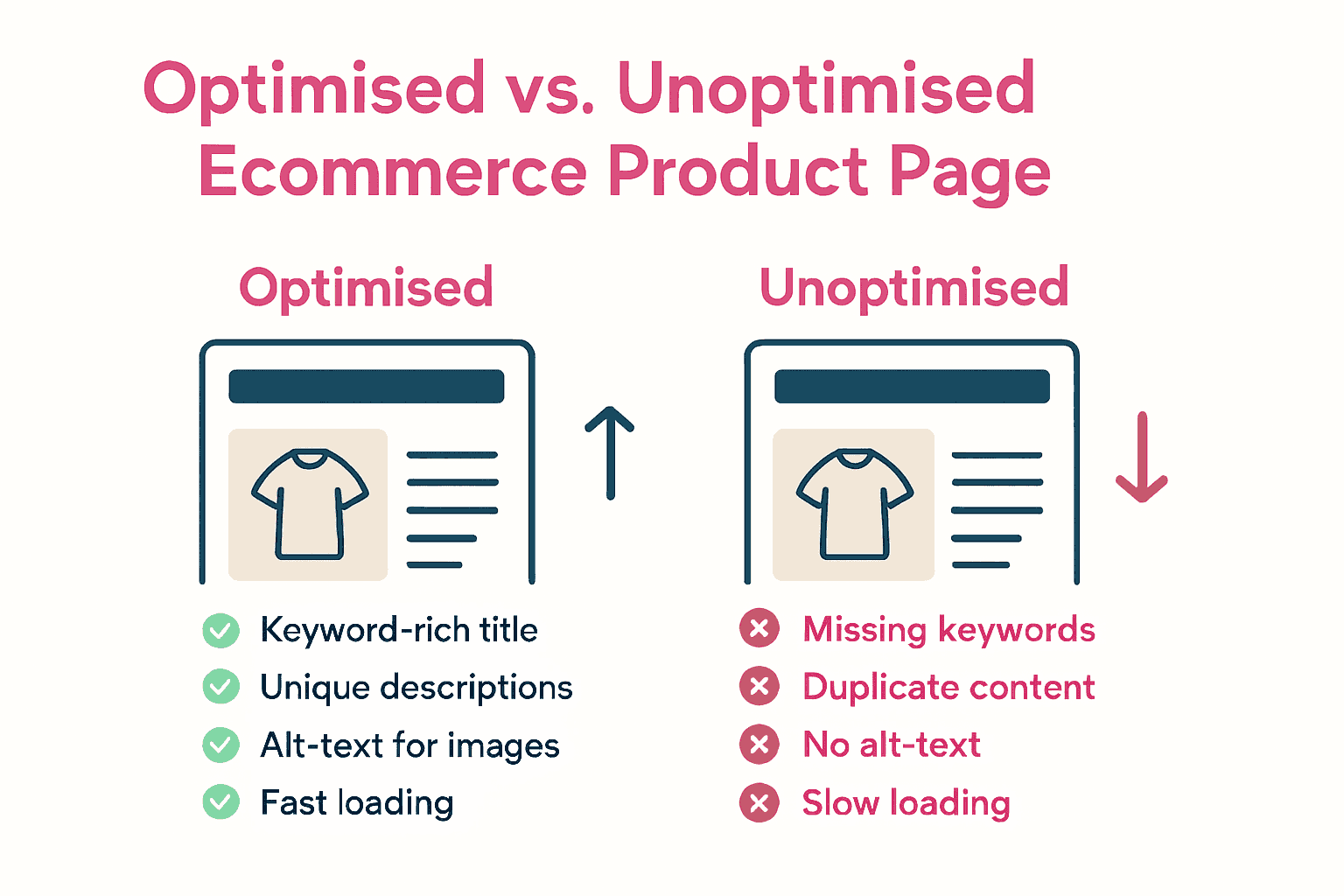
Product Title Optimization: Crafting descriptive, keyword-rich product titles
Image SEO: Using high-quality images with descriptive alt text
Content Quality: Creating unique, compelling product descriptions
URL Structure: Developing clear, keyword-integrated website URLs
Technical SEO requires a comprehensive approach to website infrastructure. As Digital Marketing Institute highlights, this involves ensuring mobile responsiveness, improving page load speeds, and implementing structured data markup. These technical elements not only enhance search engine indexing but also significantly improve user experience.

For a deeper technical understanding, check out our mobile SEO guide, which provides in-depth insights into optimizing your online store’s technical performance.
Local SEO For Ecommerce Businesses
Local SEO has become an increasingly critical strategy for ecommerce businesses seeking to attract customers in specific geographic areas. According to Coursera, successful local SEO involves a strategic approach to increasing visibility in location-based search results.
Key local SEO strategies for ecommerce businesses include:
Google My Business Optimization: Creating and maintaining a comprehensive business profile
NAP Consistency: Ensuring Name, Address, and Phone Number are identical across all online platforms
Local Keyword Targeting: Incorporating location-specific keywords into website content
Local Backlink Building: Establishing connections with local businesses and directories
Location-Specific Content: Developing content that resonates with local audience interests
Implementing these techniques requires a nuanced understanding of how local search algorithms work. By maintaining consistent business information, creating locally relevant content, and building strong community connections, ecommerce businesses can significantly improve their local search visibility. For a comprehensive breakdown of these strategies, check out our Local SEO Guide for Ecommerce, which provides in-depth insights into boosting local online presence.
Common Ecommerce SEO Mistakes To Avoid
Ecommerce SEO requires precision and strategic planning to avoid potential pitfalls that can significantly impact search engine performance. According to Coursera, several critical mistakes can undermine an online store’s visibility and user experience.
Most common ecommerce SEO mistakes include:
Mobile Optimization Neglect: Failing to create a responsive, mobile-friendly website
Duplicate Content: Using identical product descriptions across multiple pages
Poor Site Navigation: Creating complex, confusing website structures
Slow Page Load Times: Allowing technical issues to reduce site performance
Inconsistent Product Information: Presenting varied details across different platforms
As Digital Marketing Institute highlights, technical SEO aspects like addressing broken links and conducting regular SEO audits are crucial for maintaining search engine rankings. Understanding and proactively addressing these common mistakes can dramatically improve your online store’s visibility.
For comprehensive insights into avoiding these pitfalls, explore our Why Is SEO Important Guide to develop a more robust SEO strategy.
Unlock Your Online Store’s True Potential with Expert Ecommerce SEO Support
The struggle to boost visibility and attract qualified organic traffic can feel overwhelming for ecommerce retailers. This article highlights common challenges like keyword optimisation, technical SEO, and avoiding duplicate content. If you are determined to rise above these pitfalls and improve your search engine rankings, it is crucial to take a comprehensive and proven approach.

Experience the confidence that comes with partnering with a team boasting over 25 years of success in scaling ecommerce brands. At iwanttobeseen.online, we specialise in digital marketing solutions tailored for online stores, including expert SEO strategies, AI-powered insights, and more. Explore our Complete Guide to SEO for E‑Commerce for actionable tactics or visit our homepage to get started today. Don’t let technical hurdles or poor optimisation hold your store back any longer. Take decisive action now to elevate your ecommerce website’s presence and win more customers.
Frequently Asked Questions
What is Ecommerce SEO?
Ecommerce SEO refers to the strategic process of optimising an online store’s digital presence to enhance search engine visibility and attract organic traffic, improving your store’s rankings in search engine results pages (SERPs).
Why is keyword research important for ecommerce SEO?
Keyword research is crucial as it helps identify relevant search terms that potential customers are using. This informs your on-page optimisation and content marketing strategies, ensuring that your store appears in search results for the right queries.
What are some common on-page SEO techniques for ecommerce sites?
Common on-page SEO techniques include optimising product titles with relevant keywords, ensuring high-quality product images with descriptive alt text, creating unique product descriptions, and structuring URLs to be clear and keyword-rich.
How can local SEO benefit ecommerce businesses?
Local SEO can attract customers in specific geographic areas, helping ecommerce businesses to improve their visibility in location-based searches. Techniques include optimising a Google My Business profile, maintaining consistent business information, and developing location-specific content.
Recommended
Comments