.png)
Holistic SEO Explained: Elevating eCommerce Growth


Britain’s eCommerce sector is rapidly evolving, with over 85 percent of British consumers shopping online every month. Staying visible in search results means more than technical tweaks—it demands a holistic SEO strategy that embraces content quality, technical excellence, and user experience. As British and Irish retailers navigate fierce competition, integrating AI and social media with SEO is now crucial for building lasting online authority and meeting customers where they are.
Table of Contents
Key Takeaways
Point | Details |
Holistic SEO Approach | Integrates technical performance, content quality, and user experience to create a sustainable online presence. |
eCommerce Strategies | Focus on product page optimisation, technical enhancements, and user experience design to improve search engine performance. |
AI and Social Media Integration | Leverage AI analytics to enhance content strategies and connect social signals with SEO efforts for better visibility. |
Avoiding Common Pitfalls | Steer clear of keyword manipulation and technical neglect to maintain search engine performance and user engagement. |
Holistic SEO: Definition and Core Principles
Holistic SEO represents a comprehensive approach to search engine optimisation that transcends traditional technical tactics. At its core, this strategy integrates multiple website elements to create a sustainable digital ecosystem that appeals both to search engines and human users. A complete approach to SEO requires understanding that success isn’t about individual tactics but creating an interconnected, high-quality web experience.
The fundamental principles of Holistic SEO centre around four critical domains: technical performance, content quality, user experience, and strategic keyword integration. Technical performance involves ensuring websites load quickly, are mobile responsive, and have clean, crawlable site structures. Content quality demands creating genuinely useful, original materials that address user questions comprehensively. User experience focuses on intuitive navigation, engaging design, and seamless interaction across all device types. Strategic keyword integration means naturally embedding relevant search terms without compromising readability or user comprehension.
Unlike traditional SEO approaches that might prioritise short-term ranking manipulations, Holistic SEO builds long-term digital credibility. This method recognises that search algorithms increasingly reward websites providing genuine value. By aligning technical infrastructure, content strategy, and user needs, eCommerce businesses can develop robust online presences that attract and retain customer attention. The goal isn’t merely to rank higher, but to create a digital asset that genuinely serves user requirements while meeting search engine criteria.
Pro tip: Conduct a comprehensive website audit quarterly to identify and address potential technical, content, and user experience gaps that might impact your Holistic SEO strategy.
Types of Holistic SEO Strategies for eCommerce
eCommerce businesses require nuanced SEO approaches that go beyond traditional optimisation techniques. Comprehensive eCommerce SEO strategies must address multiple interconnected domains to create sustainable online visibility. These strategies encompass technical infrastructure, content development, user experience design, and strategic keyword implementation, each playing a crucial role in achieving robust search engine performance.
The primary types of Holistic SEO strategies for eCommerce include product page optimisation, technical performance enhancement, content marketing, and user experience refinement. Product page optimisation involves crafting detailed, keyword-rich descriptions, high-quality imagery, and structured data that helps search engines understand product context. Technical performance focuses on improving site speed, mobile responsiveness, secure connections, and clean site architecture. Content marketing strategies centre on developing informative blog posts, buying guides, and comparative resources that attract potential customers while establishing domain authority. User experience refinement includes creating intuitive navigation, reducing bounce rates, and ensuring seamless cross-device interactions.
Successful Holistic SEO for eCommerce requires a dynamic, integrated approach that adapts to evolving search engine algorithms and consumer behaviours. By implementing these multifaceted strategies, online retailers can create digital experiences that not only rank well but also genuinely serve customer needs. The ultimate goal is developing a comprehensive digital presence that attracts, engages, and converts potential customers through strategic, value-driven optimisation techniques.
Pro tip: Develop a quarterly SEO strategy review process that systematically evaluates your website’s performance across technical, content, and user experience metrics.
Key Pillars: Content, Technical, and User Experience
Holistic SEO approaches represent a sophisticated integration of three fundamental pillars: content, technical infrastructure, and user experience. These interconnected domains work synergistically to create a robust digital ecosystem that satisfies both search engine algorithms and human user requirements. Understanding how these pillars interact is crucial for eCommerce businesses seeking sustainable online visibility and engagement.
Content serves as the foundational pillar, encompassing more than just written text. It involves creating comprehensive, high-quality resources that address user intent comprehensively. This means developing product descriptions, category pages, blog posts, buying guides, and multimedia content that provides genuine value. Technical infrastructure supports this content by ensuring optimal site performance, including rapid page loading speeds, mobile responsiveness, secure connections, and clean site architecture. These technical elements enable search engines to effectively crawl, index, and understand website content while providing smooth user interactions.

User experience represents the critical third pillar, bridging content and technical performance. It focuses on creating intuitive navigation, reducing interaction friction, and designing interfaces that guide users seamlessly through their purchasing journey. This involves implementing clear site structures, responsive design, accessible navigation, fast loading times, and streamlined checkout processes. By harmonising these three pillars, eCommerce websites can create holistic digital experiences that not only rank well in search results but also genuinely satisfy customer needs and expectations.
Here is a summary of how each holistic SEO pillar supports eCommerce success:
Pillar | Primary Role | Typical Business Benefits |
Content | Inform and guide potential buyers | Greater trust and authority |
Technical | Ensure accessibility and fast loading | Enhanced crawling and conversion rate |
User Experience | Facilitate smooth site navigation | Lower bounce rates and higher sales |
Pro tip: Conduct monthly cross-functional audits that evaluate your website’s performance across content quality, technical health, and user experience metrics.
Integrating AI and Social Media for Maximum Impact
AI-powered social media analytics have revolutionised how eCommerce businesses approach digital marketing strategies. By leveraging advanced artificial intelligence technologies, companies can now transform raw social media data into actionable insights that directly enhance search engine optimisation efforts. This sophisticated approach goes beyond traditional marketing methods, creating a dynamic ecosystem where social signals and search performance work harmoniously to boost online visibility.
The integration of AI with social media strategies enables businesses to develop more nuanced, data-driven content approaches. Machine learning algorithms can now analyse user engagement patterns, predict content performance, and recommend optimisation strategies in real-time. These technologies help eCommerce platforms understand audience preferences with unprecedented depth, allowing for hyper-personalised content creation that resonates with specific customer segments. By interpreting complex social media interactions, AI tools can identify trending topics, optimal posting times, and content formats that are most likely to generate meaningful engagement and improve search rankings.
Modern eCommerce businesses must view social media and search engine optimization as interconnected channels rather than isolated marketing activities. AI serves as the critical bridge, translating social media interactions into strategic SEO insights. This means tracking how social content drives website traffic, understanding which social platforms generate the most valuable user interactions, and using these insights to refine overall digital marketing strategies. By creating a symbiotic relationship between social media engagement and search engine performance, businesses can develop more intelligent, responsive digital marketing ecosystems that adapt quickly to changing user behaviours.
Pro tip: Invest in AI-powered social media analytics tools that provide comprehensive insights into content performance and audience engagement across multiple digital platforms.
Common Mistakes and Risks to Avoid
Holistic SEO for eCommerce demands a sophisticated understanding of potential pitfalls that can derail digital marketing efforts. Businesses frequently encounter critical errors that compromise their search engine performance and online visibility. These mistakes often stem from oversimplified approaches, short-term thinking, and a lack of comprehensive strategy that integrates technical, content, and user experience considerations.
One of the most significant risks involves keyword manipulation and poor content quality. Many eCommerce websites mistakenly stuff product descriptions and category pages with repetitive keywords, creating unnatural, machine-focused content that alienates human readers. This approach not only diminishes user experience but also triggers search engine penalties that can dramatically reduce organic visibility. Similarly, neglecting technical infrastructure represents another substantial risk. Slow-loading pages, non-responsive mobile designs, and complex navigation structures can devastate user engagement, causing high bounce rates and signalling to search algorithms that the website provides poor value.
Additional critical mistakes include inconsistent social media strategies, overlooking local SEO nuances, and failing to adapt to evolving search algorithms. eCommerce businesses must recognise that modern SEO requires a holistic, adaptive approach that continuously monitors performance metrics, understands audience behaviour, and remains flexible in content and technical implementation. Attempting to game search engine systems through quick fixes or purchasing low-quality backlinks can result in long-term ranking penalties that are challenging and time-consuming to overcome.
Pro tip: Implement a quarterly comprehensive website audit that systematically evaluates technical performance, content quality, and user experience metrics across all digital platforms.
Comparing Holistic SEO with Traditional Methods
Comprehensive SEO approaches reveal fundamental differences between traditional and holistic search engine optimisation strategies. Traditional SEO methods typically focused on narrow, tactical interventions like keyword density, backlink quantity, and surface-level technical optimisations. These approaches treated search engine ranking as a mechanical process, attempting to manipulate algorithms through short-term, often superficial tactics that prioritised search engine robots over human user experience.
Holistic SEO represents a profound paradigm shift, viewing websites as integrated ecosystems rather than collections of individual optimisation elements. Where traditional methods might concentrate solely on keyword placement or link building, holistic strategies encompass a comprehensive approach that balances technical infrastructure, content quality, user experience, and strategic engagement. This means considering how every website element interacts: from page load speeds and mobile responsiveness to content depth, user interaction patterns, and cross-platform consistency. The holistic approach recognises that search engines increasingly reward websites that provide genuine value, authentic user experiences, and comprehensive, meaningful content.
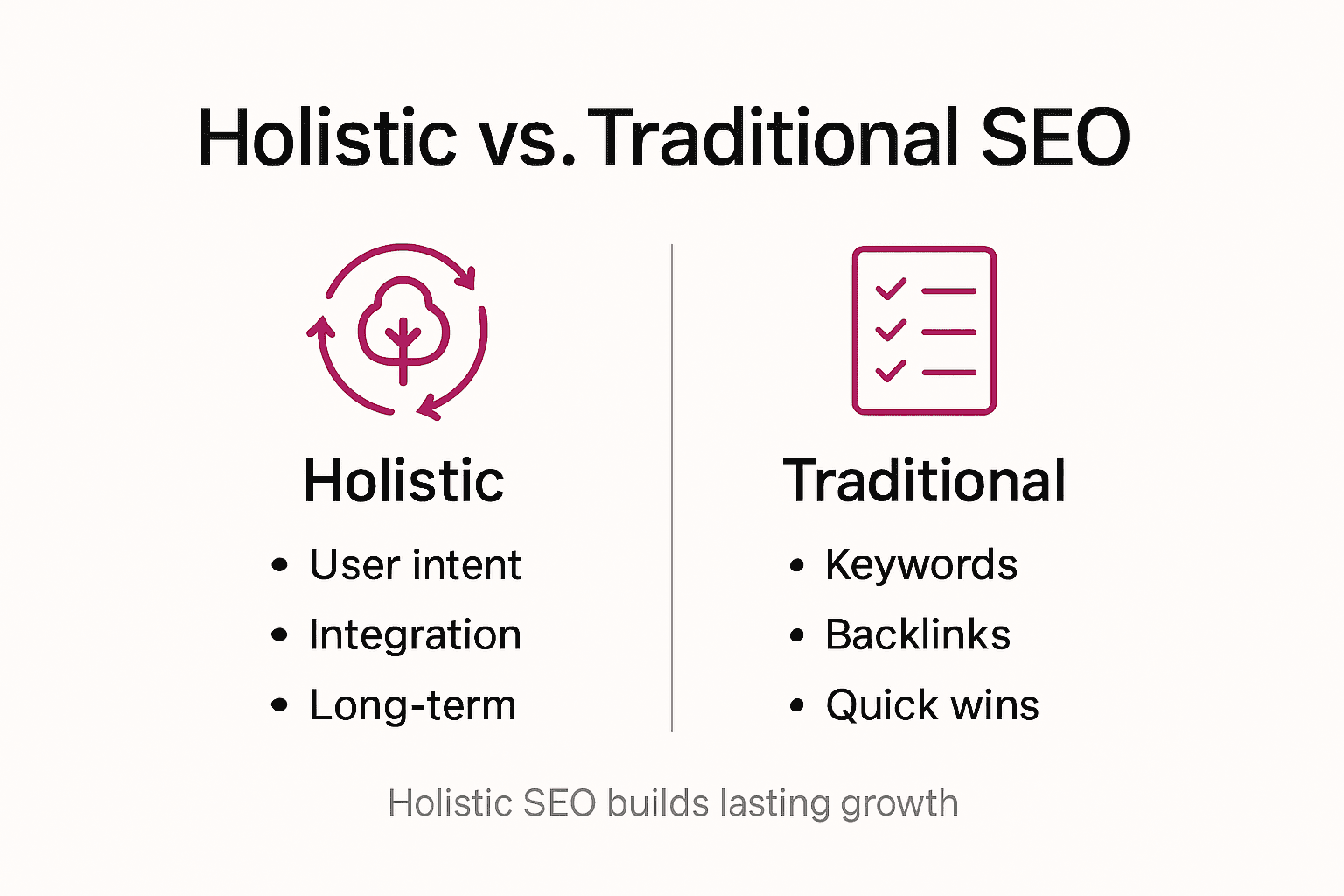
The key distinctions between traditional and holistic SEO extend beyond technical implementation into philosophical approach. Traditional methods often treated SEO as a standalone marketing tactic, whereas holistic strategies view search optimisation as an integral part of broader digital ecosystem development. This means moving beyond mere ranking improvements to create digital experiences that genuinely serve user needs, build brand credibility, and establish long-term online authority. By integrating technical performance, content strategy, user experience design, and adaptive analytics, holistic SEO offers a more sustainable, future-proof approach to digital visibility.
To clarify key differences, here is a comparison between holistic and traditional SEO approaches:
Approach Element | Traditional SEO Focus | Holistic SEO Focus |
Main Objective | Boost page rankings quickly | Build lasting digital value |
Content Strategy | Keyword targeting | Address user intent holistically |
Technical Emphasis | Surface-level improvements | Full site performance and security |
User Experience | Often overlooked | Central to optimisation efforts |
Measurement Metrics | Rankings and backlinks only | Engagement, retention, experience |
Pro tip: Transition from tactical SEO metrics to holistic performance indicators by developing comprehensive dashboards that track user engagement, content quality, and technical health simultaneously.
Elevate Your eCommerce Success with Holistic SEO Expertise
Struggling to synchronise technical performance, content quality, and user experience into one seamless strategy The article highlights how Holistic SEO is essential for building a lasting digital presence that not only ranks well but truly serves your customers’ needs. If you want to avoid common pitfalls like keyword stuffing and slow site speed and instead leverage an integrated approach that drives real growth then our specialised digital marketing services are here to help.
At iWantToBeSeen, we combine over 25 years of hands-on experience scaling eCommerce brands with expertise in SEO, AI, and social media marketing. We understand the power of aligning technical infrastructure, content strategy, and user-focused design to create a robust online ecosystem that attracts, engages, and converts. Our solutions are tailored to your unique business challenges so you can stay ahead of evolving search algorithms and deliver meaningful user experiences.

Transform your SEO approach today by partnering with experts who know the importance of holistic optimisation Visit our website now and discover how our proven strategies can accelerate your eCommerce growth. Don’t wait for rankings to stagnate act now and build a digital asset that truly performs.
Frequently Asked Questions
What is Holistic SEO?
Holistic SEO is a comprehensive approach to search engine optimisation that combines technical performance, content quality, user experience, and strategic keyword integration to create a sustainable online presence.
How does Holistic SEO differ from traditional SEO methods?
Unlike traditional SEO, which often focuses on short-term ranking tactics, Holistic SEO emphasises creating value for users and search engines by integrating various website elements into a cohesive digital ecosystem.
What are the key pillars of Holistic SEO for eCommerce?
The key pillars include content creation that meets user intent, technical performance to ensure quick and accessible websites, and user experience design that facilitates smooth navigation and engagement.
Why is integrating AI and social media important for Holistic SEO?
Integrating AI with social media helps eCommerce businesses gain insights into user engagement, allowing for more personalised content and effective SEO strategies that enhance overall visibility and performance.
Recommended
Comments