.png)
How to Research SEO Keywords for E-commerce Success


Over ninety percent of online customers in the British and Irish markets begin their shopping journey with a search engine. For e-commerce entrepreneurs, knowing how to reach these buyers can make all the difference. If you are struggling to increase visibility or feel unsteady with digital marketing concepts, understanding and applying strategic keyword research is the step that lays the foundation for sustained growth and more meaningful market engagement.
Table of Contents
Quick Summary
Key Point | Explanation |
1. Clearly define e-commerce goals | Establish focused objectives to guide your digital marketing strategy, such as market expansion or sales targets. |
2. Develop detailed customer personas | Identify your target audience characteristics to tailor keyword strategy, including demographics and online behaviours. |
3. Analyse competitors’ keyword strategies | Examine competitor keywords for insights and opportunities to enhance your own SEO and digital marketing approach. |
4. Utilise keyword research tools effectively | Select robust platforms to gather in-depth keyword metrics, ensuring your strategy is data-driven and informed. |
5. Validate and prioritise keywords | Create a scoring system for keywords based on potential impact and align them with your strategic marketing goals. |
Step 1: Define your e-commerce goals
Successfully launching an e-commerce venture requires crystal-clear strategic objectives that will drive your entire digital marketing approach. Understanding strategic goal-setting as a core prerequisite will help you establish a robust foundation for your online business.
Start by identifying your core business aims with precision. Are you targeting market expansion, increasing brand visibility, generating specific sales volumes, or introducing new product ranges? Each goal demands a unique keyword research strategy. For instance, a goal of regional market penetration might require localised keyword targeting, while a product launch objective could demand more specific long-tail keyword exploration. Consider breaking down your goals into specific, measurable categories such as revenue targets, customer acquisition metrics, conversion rates, and market share expansion.
Your keyword research must directly align with these predefined objectives. This means selecting search terms that not only attract traffic but specifically support your strategic aims. The comprehensive review of digital entrepreneurship factors underscores that precise goal definition connects directly to potential competitive advantages.
Insider Tip: Create a goal hierarchy with primary and secondary objectives to ensure your keyword strategy remains focused and adaptable to changing market conditions.
Step 2: Identify your target audience
Understanding who will purchase your products is fundamental to successful e-commerce keyword research. Consumer marketing strategies critically depend on thorough audience identification, enabling you to craft precise digital marketing approaches that resonate with potential customers.
Begin by developing detailed customer personas that go beyond basic demographics. Consider age, income, geographical location, professional background, online behaviour, and specific pain points relevant to your product range. Ask yourself key questions: What motivates your potential customers? What challenges do they face that your products can solve? What online platforms do they frequent? What language and search terms might they use when seeking solutions?
This audience research will directly inform your keyword strategy. By understanding your customers intimately, you can select search terms that precisely match their language, intent, and search patterns. Different audience segments will use varying search terminology, so developing multiple persona profiles allows you to create nuanced, targeted keyword approaches that speak directly to each customer group.
Here is a summary of audience persona attributes and their significance:
Attribute | Why It Matters | Example Insights |
Age | Affects product style choice | Younger buyers prefer trends |
Location | Enables localised targeting | City shoppers need express delivery |
Income | Dictates price sensitivity | Premium goods suit higher earners |
Online Behaviour | Guides channel selection | Active on Instagram or forums |
Purchase Motivation | Refines messaging strategies | Seeks bargains or exclusivity |
Pain Points | Informs offer positioning | Seeks fast shipping solutions |
Insider Tip: Conduct real conversations with potential customers through surveys or focus groups to gain authentic insights into their search behaviours and language preferences.
Step 3: Analyse competitors’ keyword strategies
Unveiling your competitors’ keyword approaches provides critical insights that can transform your e-commerce SEO strategy. Competitor analysis tools offer powerful methods for uncovering traffic-driving keywords and identifying untapped market opportunities that could significantly boost your online visibility.
Start by identifying your top three to five direct online competitors in your specific product niche. Use specialised SEO tools to analyse their existing keyword profiles, examining which search terms generate substantial traffic to their websites. Systematic competitor keyword tracking helps reveal strategic gaps and high-performing search term opportunities that you can potentially leverage in your own digital marketing approach. Look beyond surface level metrics and dig deep into the contextual usage of keywords, understanding not just their frequency but their strategic placement within content, product descriptions, and metadata.

Pay close attention to the long tail keywords your competitors might be overlooking. These more specific, less competitive search phrases can offer remarkable opportunities for targeted traffic acquisition. Analyse the search intent behind these keywords, understanding how they connect potential customers with product solutions. By comprehensively mapping out your competitors’ keyword landscapes, you can develop a more nuanced and strategic approach to your own SEO efforts.
Insider Tip: Create a spreadsheet comparing your competitors’ top performing keywords, their search volumes, and your current ranking potential to systematically prioritise your keyword targeting strategy.
Step 4: Use keyword research tools effectively
Systematic keyword research techniques can transform your e-commerce SEO strategy, offering profound insights into search behaviour and market opportunities. Mastering these tools requires a strategic approach that goes beyond surface level data analysis.
Begin by selecting robust keyword research platforms that provide comprehensive data insights. Look for tools that offer detailed metrics including search volume, competition levels, cost per click, and seasonal trends. Pay special attention to long tail and short tail keyword variations, understanding how different search phrases connect potential customers with your product offerings. Compare multiple tools to cross reference data and ensure accuracy, as each platform might provide slightly different insights.
Develop a systematic approach to tool usage by creating structured workflows. Start with broad search terms related to your product categories, then progressively narrow down to more specific long tail keywords. Analyse not just the keywords themselves, but the underlying search intent. Are customers seeking information, comparing products, or ready to purchase? This nuanced understanding will help you select keywords that genuinely align with your customers’ journey and your e-commerce objectives.
The table below compares long tail and short tail keyword benefits for e-commerce strategies:
Keyword Type | Traffic Volume | Competition Level | Conversion Likelihood |
Short Tail | High but broad reach | Very competitive | Lower conversions |
Long Tail | Lower but targeted | Less competitive | Higher conversions |
Insider Tip: Allocate dedicated time each month to update your keyword research, as search trends and consumer behaviours evolve rapidly in the digital marketplace.
Step 5: Validate and prioritise keyword opportunities
Validating keyword potential requires a strategic approach that goes beyond basic search volume metrics. Advanced keyword research techniques help systematically filter and rank opportunities most likely to drive e-commerce success, ensuring your digital marketing efforts remain laser focused and efficient.
Begin by creating a comprehensive scoring system that evaluates keywords across multiple critical dimensions. Assess each keyword’s potential through four key lenses: search volume, competition difficulty, commercial intent, and alignment with your specific product offerings. Assign numerical scores to each dimension, creating a holistic ranking mechanism that allows you to objectively compare potential keywords. Pay special attention to long tail keywords that demonstrate high commercial intent but lower competition levels these often represent hidden opportunities where you can gain significant visibility with targeted content strategies.
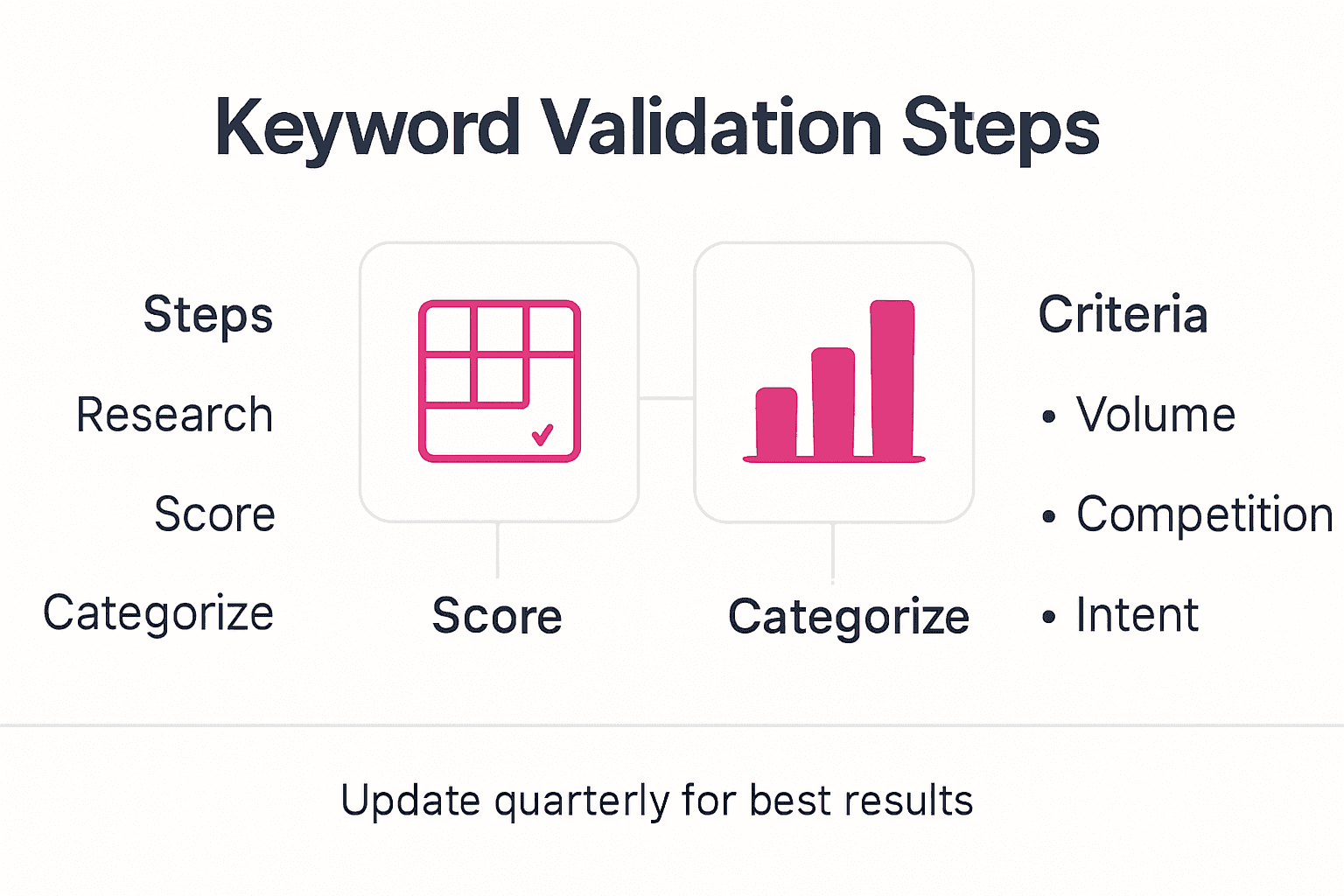
Develop a dynamic prioritisation matrix that categorises keywords into strategic tiers. Your top tier should include high potential keywords with strong commercial intent and manageable competition. Secondary tiers can capture opportunities with slightly lower immediate potential but strategic long term value. This approach allows you to create a systematic roadmap for content development and SEO investment, ensuring you allocate resources most effectively across your e-commerce keyword targeting strategy.
Insider Tip: Regularly update your keyword validation process every quarter to adapt to shifting market dynamics and emerging search trends.
Unlock Your E-commerce Potential With Expert Keyword Strategies
Researching SEO keywords for e-commerce success is about more than just traffic figures. It involves defining clear goals, understanding your audience deeply, analysing competitor strategies and validating keyword opportunities that convert visitors into loyal customers. If you find yourself overwhelmed by aligning your keyword strategy with commercial intent or struggle to prioritise high-impact terms that drive sales, you are not alone.
At iwanttobeseen.online, we specialise in digital marketing services tailored specifically for e-commerce businesses. With over 25 years of experience growing successful brands, we bring proven expertise in SEO, AI, Social Media and PPC to ensure your keyword research turns into measurable growth. Whether you need help building detailed customer personas or uncovering hidden long tail keyword gems, our seasoned team helps you build a goal-oriented, competitor-informed, and data-driven SEO strategy that powers your online visibility.
Ready to transform your e-commerce keyword strategy into lasting success? Tap into our comprehensive expertise today.

Explore how we can tailor a strategic SEO plan for your unique brand objectives at iwanttobeseen.online. Don’t wait – your ideal customers are searching for you right now.
Frequently Asked Questions
How do I define my e-commerce goals for keyword research?
To define your e-commerce goals for keyword research, identify specific objectives such as increasing sales, expanding market share, or enhancing brand visibility. Break these goals down into measurable targets to ensure your keyword strategy aligns directly with your business aims.
What attributes should I consider when identifying my target audience?
When identifying your target audience, consider attributes such as age, income, online behaviour, and purchase motivations. Create detailed customer personas that reflect these aspects to tailor your keyword strategy effectively.
How can I analyse my competitors’ keyword strategies?
To analyse your competitors’ keyword strategies, identify your top competitors and use analytical tools to examine their keyword profiles. Focus on understanding which terms drive their traffic and look for gaps in their strategies that you can exploit.
What are the benefits of using keyword research tools?
Using keyword research tools can provide valuable insights into search behaviour and market opportunities. Select a tool that offers metrics like search volume and competition levels, and systematically analyse broad and specific keywords to find the best matches for your products.
How do I validate and prioritise my selected keywords?
To validate and prioritise your keywords, create a scoring system that evaluates them based on search volume, competition, and commercial intent. This will allow you to rank keywords objectively and focus on those with the highest potential for driving traffic and conversions.
How often should I update my keyword research?
You should update your keyword research regularly, ideally every quarter, to adapt to changing market dynamics and emerging search trends. This ensures your keyword strategy remains relevant and effective in driving e-commerce success.
Recommended
Comments